

Service doctor
Andra-Elena Balcangiu-Stroescu
MD.PhD
View profileDetermination of glycated hemoglobin (HbA1c) from capillary blood in the office is a rapid investigation used for the assessment of long-term glycemic control in patients with diabetes mellitus. The test provides rapid results and helps monitor the efficacy of antidiabetic treatment.
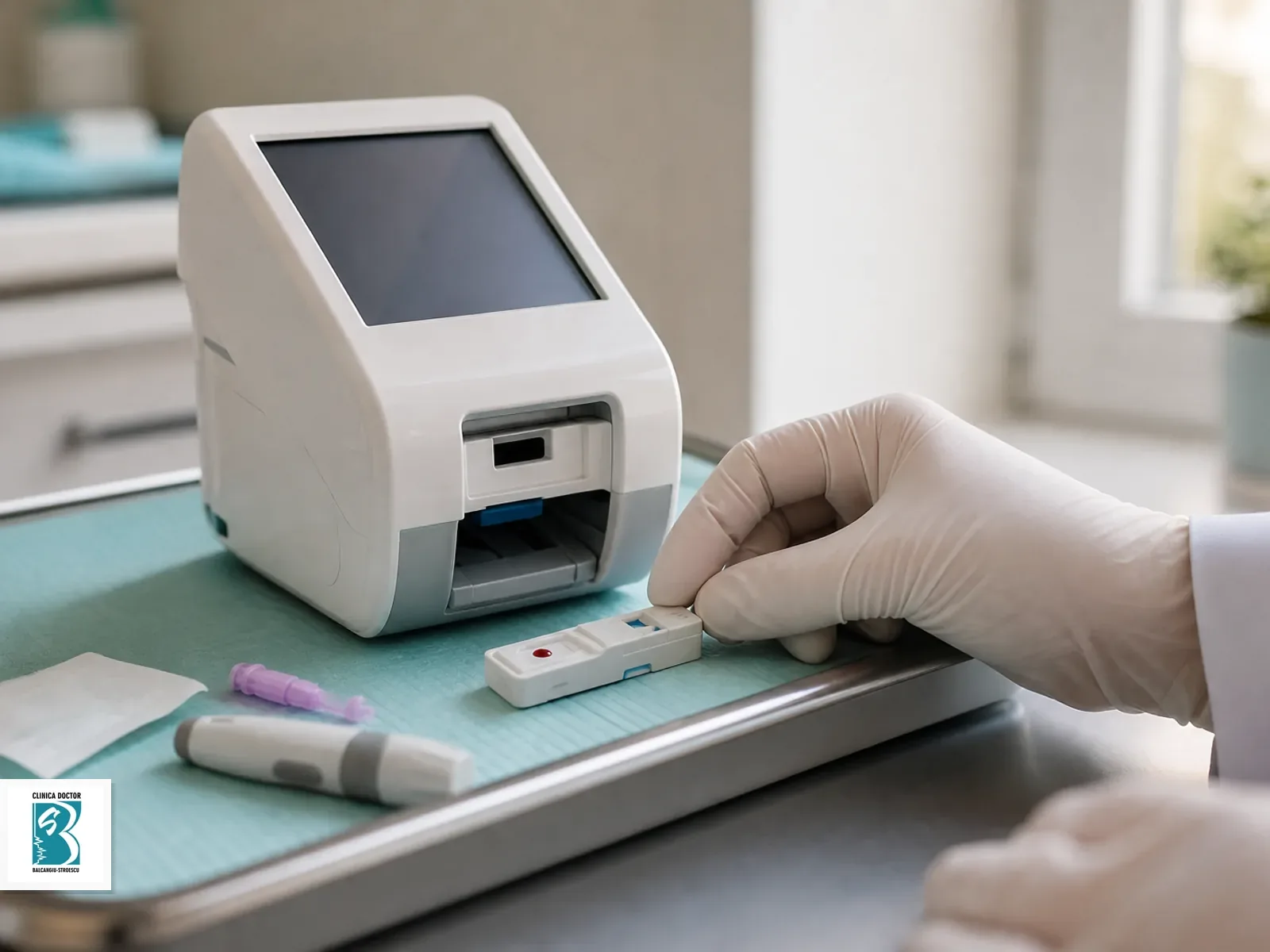
Procedural image for in-office HbA1c testing, with a rapid analyzer and prepared capillary sample.
Diabetes Mellitus
Available at:
Glycated hemoglobin (HbA1c) is an important parameter used for evaluation of long-term glycemic control, reflecting the average blood glucose values from the last 2–3 months.
Determination of HbA1c from capillary blood in the office represents a rapid and convenient method for monitoring diabetes mellitus. The test is performed through collection of a small amount of capillary blood, usually from the fingertip, and the result is available in a short time.
This investigation is used for:
Determination of glycated hemoglobin in the office offers the advantage of a rapid result, which allows the physician to immediately assess metabolic control and adjust treatment, if necessary.
The procedure is simple and minimally invasive, being performed through a puncture at the finger level for capillary blood collection.
Patient trust
5.0 / 5 from 31 published patient reviews
FREQUENTLY ASKED QUESTIONS
TEAM