Service doctor
Gabriel-Cosmin Balcangiu-Stroescu
Primary Care Physician Dermatology
View profileFacial laxity appears frequently with advancing age as a result of decreased collagen and elastin production, as well as changes in the structure of facial tissues. These changes can lead to loss of skin firmness, alteration of facial contours, and the appearance of an aged appearance. Following medical consultation, the physician may recommend a personalized treatment plan, using modern medical aesthetic procedures and technologies available in the clinic to improve skin firmness and stimulate skin regeneration.
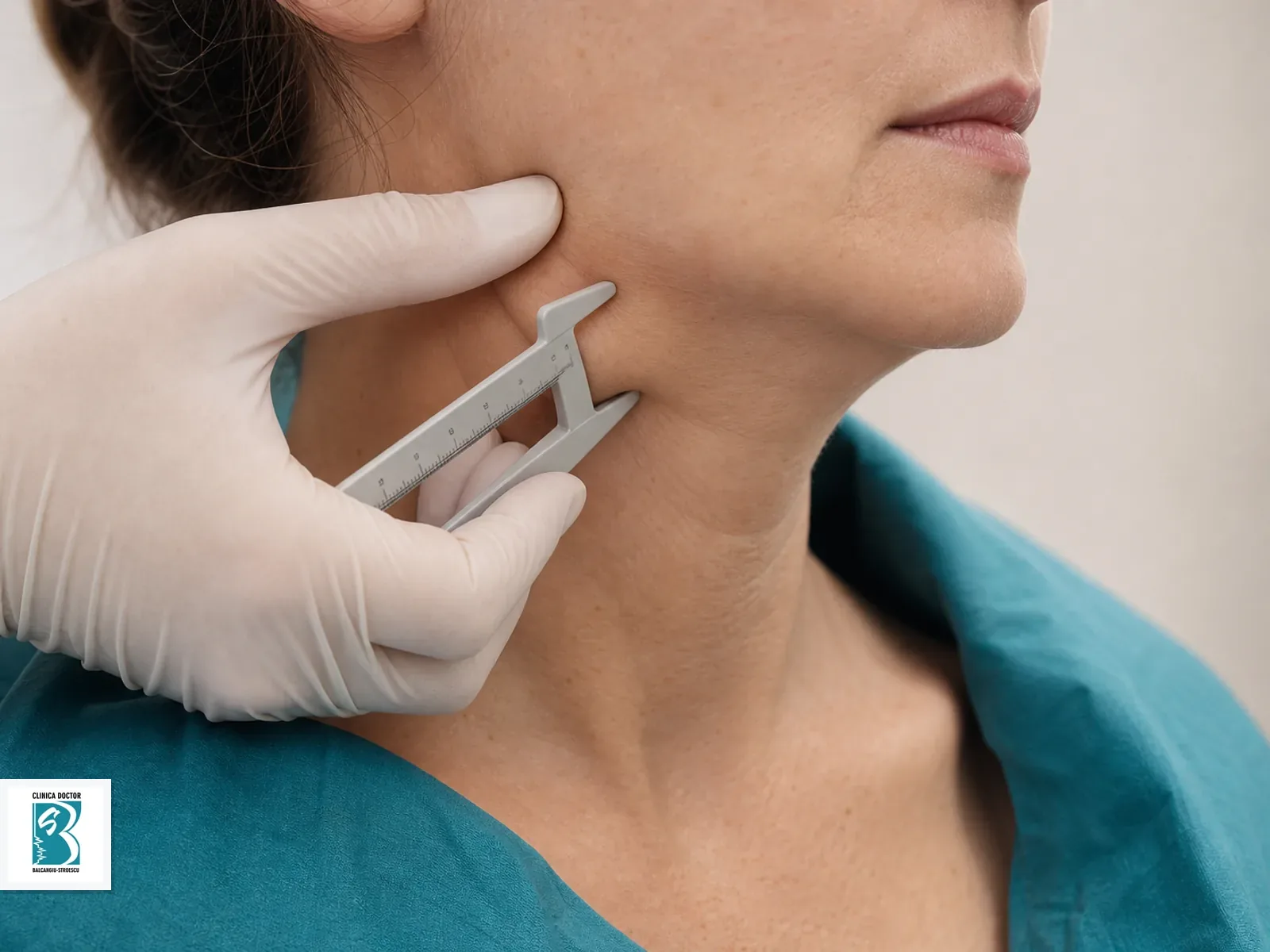
Procedural image for assessing facial laxity and loss of skin firmness.
Facial laxity and sagging skin (sagging facial skin, non-surgical facial lifting)
Available at:
Facial laxity represents a frequently encountered change in the process of skin aging. With advancing age, the production of collagen and elastin gradually decreases, and the skin structure progressively loses its firmness and elasticity.
These changes result in loss of facial contour, appearance of sagging skin at the level of the cheeks and mandible, as well as accentuation of visible signs of aging.
Beyond the natural aging process, skin laxity can be influenced by factors such as exposure to ultraviolet radiation, weight fluctuations, lifestyle, and genetic predisposition. For this reason, the therapeutic approach must be adapted to the individual characteristics of each patient.
Modern aesthetic medicine offers efficient, non-surgical solutions for improving skin firmness and stimulating cutaneous regeneration. Following medical consultation, the physician evaluates skin quality, the degree of laxity, and the patient's aesthetic objectives, establishing a personalized treatment plan. This may include injectable procedures, collagen biostimulators, and advanced skin rejuvenation technologies.
The procedures available in the clinic contribute to:
The optimal treatment is determined following medical consultation, based on the degree of skin laxity, skin characteristics, and the patient's aesthetic objectives.
Patient trust
5.0 / 5 from 31 published patient reviews
FREQUENTLY ASKED QUESTIONS