
Service doctor
Iuliana Spiridon
Plastic Surgery Specialist Physician
View profileMelanoma is an aggressive form of skin cancer that develops from the pigment-producing cells of the skin (melanocytes). Early diagnosis and treatment are essential for disease control and for preventing its spread. Standard treatment for melanoma consists of surgical excision of the lesion together with a safety margin of healthy tissue, in order to reduce the risk of recurrence. During the medical consultation, the physician evaluates the skin lesion and establishes a personalized treatment plan.
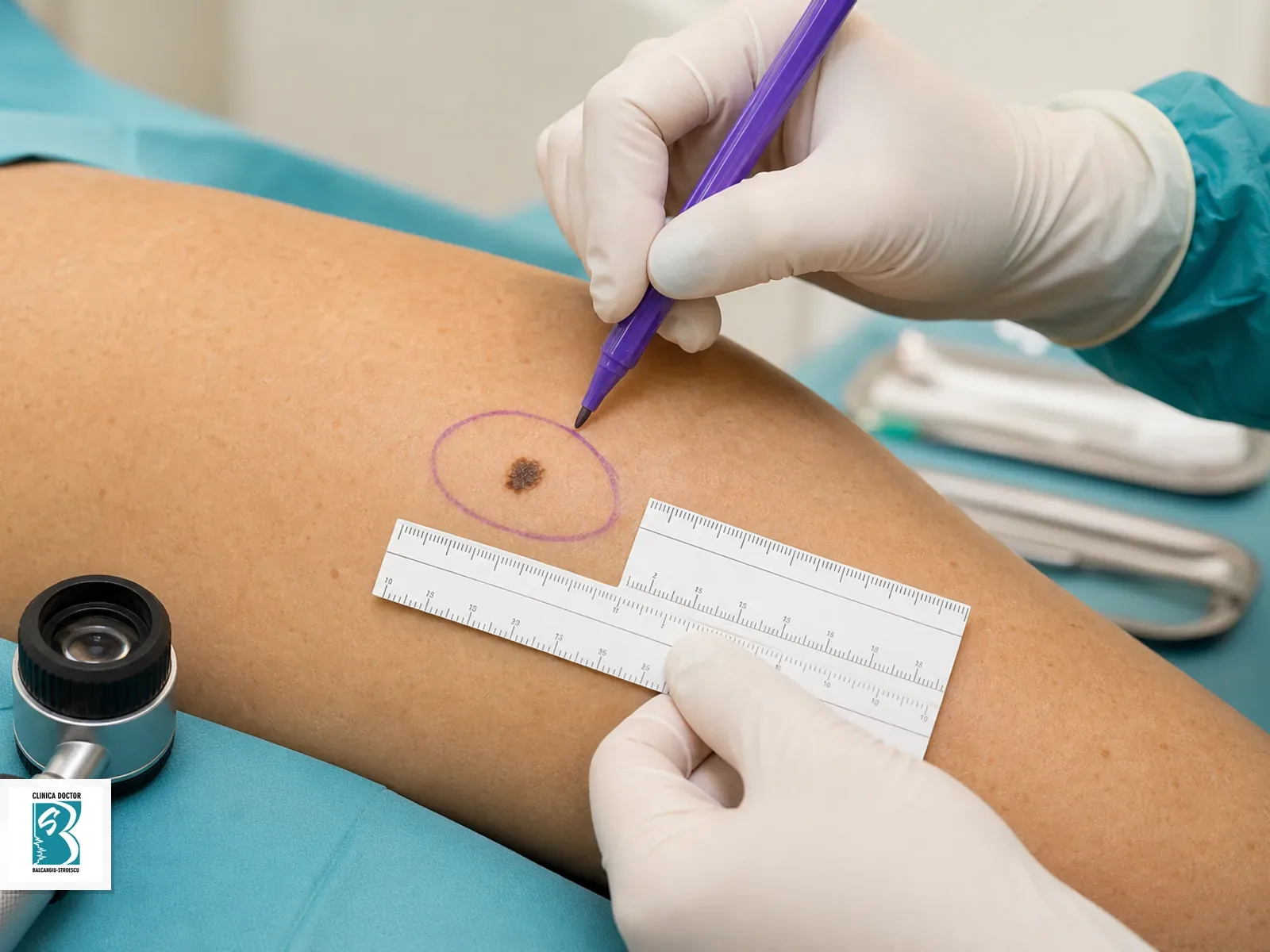
Procedural image for Excizie melanom cu margine de siguranta medic specialist, with a measured pigmented lesion and marked safety margin.
Cutaneous oncologic surgery
Available at:
Melanoma is one of the most aggressive forms of skin cancer and develops from melanocytes, the cells responsible for skin pigmentation. Although it is rarer than other types of skin cancer, melanoma has a greater potential for spread and metastasis if not diagnosed and treated promptly.
Risk factors for melanoma development include excessive exposure to ultraviolet radiation, repeated sunburns, fair skin phototype, family history of melanoma, and the presence of a large number of pigmented nevi.
Melanoma may appear as a new pigmented lesion or through modification of an existing mole. Changes that may suggest melanoma development include changes in the size, color, or shape of a pigmented lesion.
The primary treatment of melanoma consists of surgical excision of the lesion together with a margin of safety of healthy tissue. The size of the safety margin is determined based on the characteristics of the tumor and the result of histopathological examination.
During the medical consultation, the physician evaluates the skin lesion and the patient's medical history. Based on this evaluation, a personalized treatment plan is established, tailored to each case.
Patient trust
5.0 / 5 from 31 published patient reviews
FREQUENTLY ASKED QUESTIONS