

Service doctor
Gabriel-Cosmin Balcangiu-Stroescu
Primary Care Physician Dermatology
View profilePlantar hyperhidrosis represents excessive sweating at the level of the soles and can occur independently of temperature or physical activity. This problem can cause discomfort during walking, persistent sensation of moisture, and can affect daily activities. During the medical consultation, the physician evaluates the degree of excessive sweating and establishes a personalized treatment plan, using dermatological procedures available in the clinic to reduce the activity of the sweat glands.
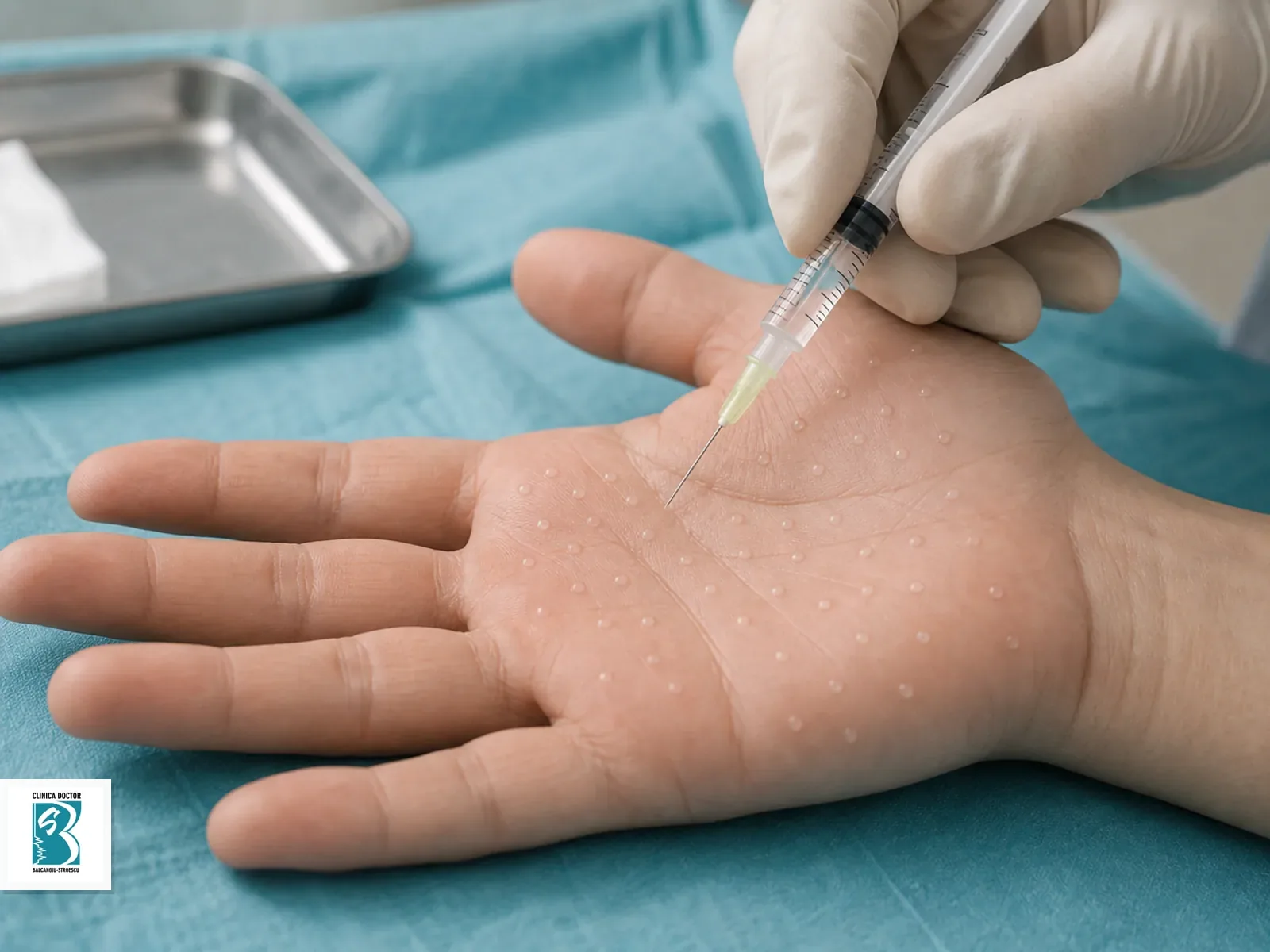
Procedural image for palmar or plantar hyperhidrosis, showing fine injection in the marked area.
Medical Botox
Available at:
Plantar hyperhidrosis is a condition characterized by excessive sweating at the level of the soles, which exceeds the normal needs of the body for temperature regulation. This problem can occur even in the absence of physical effort or elevated temperatures and can have a significant impact on daily comfort.
Excessive sweating at the plantar level can be influenced by genetic factors, hyperactivity of the sweat glands, or certain mechanisms of the autonomic nervous system. In some cases, hyperhidrosis can promote the appearance of skin irritations or fungal infections at the level of the skin.
In modern dermatological medicine, there are effective treatments that can contribute to reducing excessive sweating and improving patient comfort.
During the medical consultation, the physician evaluates the severity of hyperhidrosis, skin characteristics, and the patient's medical history. Based on this evaluation, a personalized treatment plan is established, adapted to the needs of each patient.
Treatment available in the clinic:
The treatment consists of injecting botulinum toxin into the affected areas, and the effect can last, on average, between 4 and 6 months.
Patient trust
5.0 / 5 from 31 published patient reviews
FREQUENTLY ASKED QUESTIONS