

Service doctor
Andra-Elena Balcangiu-Stroescu
MD.PhD
View profileInsertion and initiation of a continuous glucose monitoring (CGM) sensor is a medical procedure used for real-time monitoring of blood glucose values. The system allows assessment of glucose variations throughout the day and contributes to optimizing the management of diabetes mellitus.
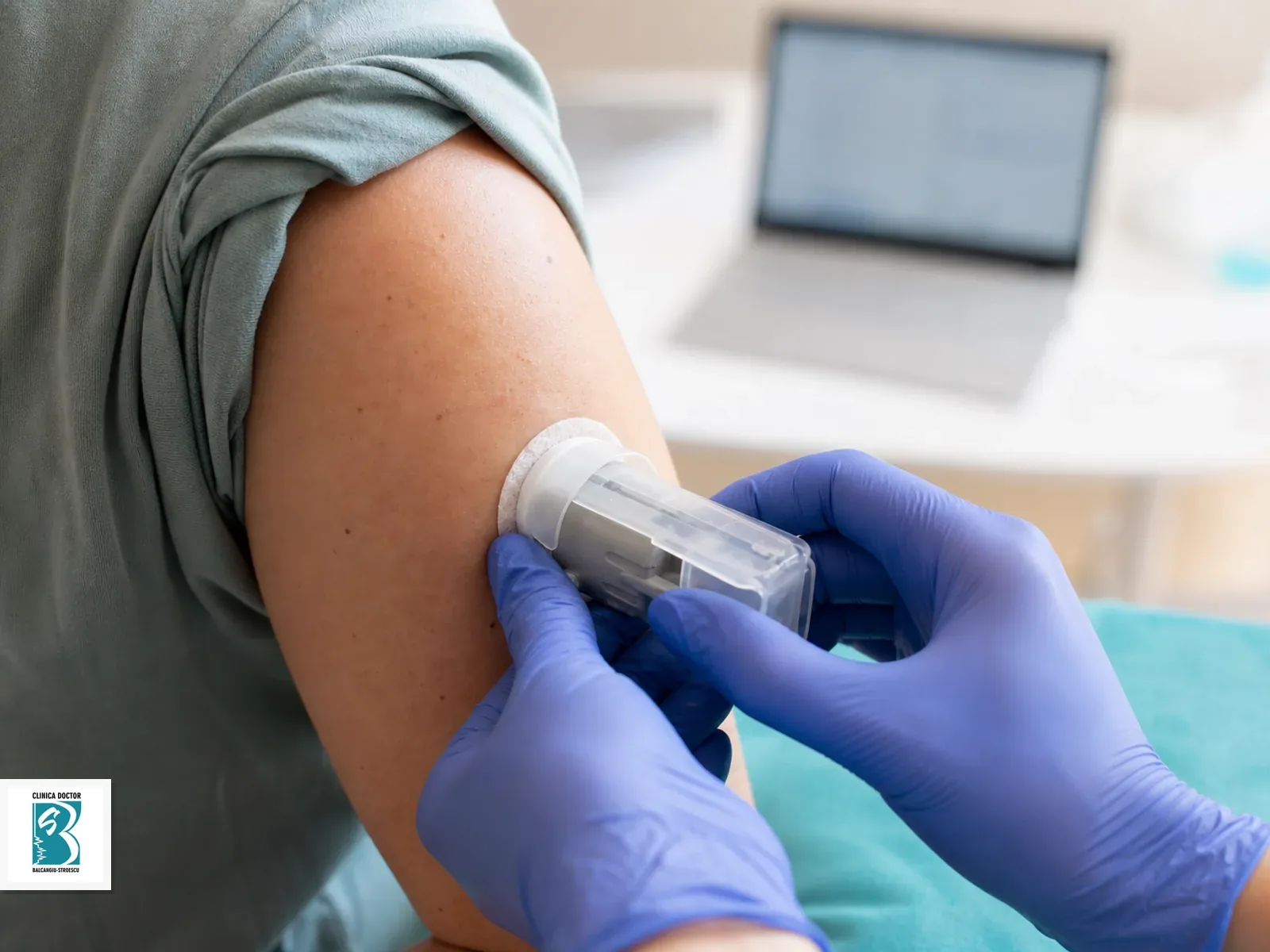
Procedural image for CGM sensor placement, with an applicator and sensor clinically positioned on the arm.
Diabetes Mellitus
Available at:
Continuous Glucose Monitoring (CGM – Continuous Glucose Monitoring) is a modern method used in the management of diabetes mellitus, which allows continuous monitoring of blood glucose values throughout the entire day and night.
The procedure involves placement of a subcutaneous sensor, which measures the glucose level in interstitial fluid and transmits the values to a monitoring device or to a mobile application.
During the consultation for CGM sensor placement and initiation, the doctor or medical staff:
Continuous glucose monitoring provides detailed information about glucose fluctuations, hypoglycemic or hyperglycemic episodes, and glucose trends, facilitating treatment adjustment and optimization of metabolic control.
This method is especially recommended for:
The sensor placement procedure is quick and minimally invasive, and the patient receives recommendations regarding system use and interpretation of glucose data.
The displayed price includes the cost of the sensor.
Patient trust
5.0 / 5 from 31 published patient reviews
FREQUENTLY ASKED QUESTIONS
TEAM