Service doctor
Laura Răducu
Associate Professor Dr.
View profileBasal cell carcinoma is the most common form of skin cancer and appears at the level of the basal cells of the skin. This condition is primarily associated with prolonged exposure to ultraviolet radiation and frequently occurs on sun-exposed areas, such as the face, scalp, ears, or neck. Early diagnosis and treatment are essential for preventing lesion extension. During medical consultation, the physician evaluates the skin lesion and establishes a personalized treatment plan, which may include surgical excision of the tumor.
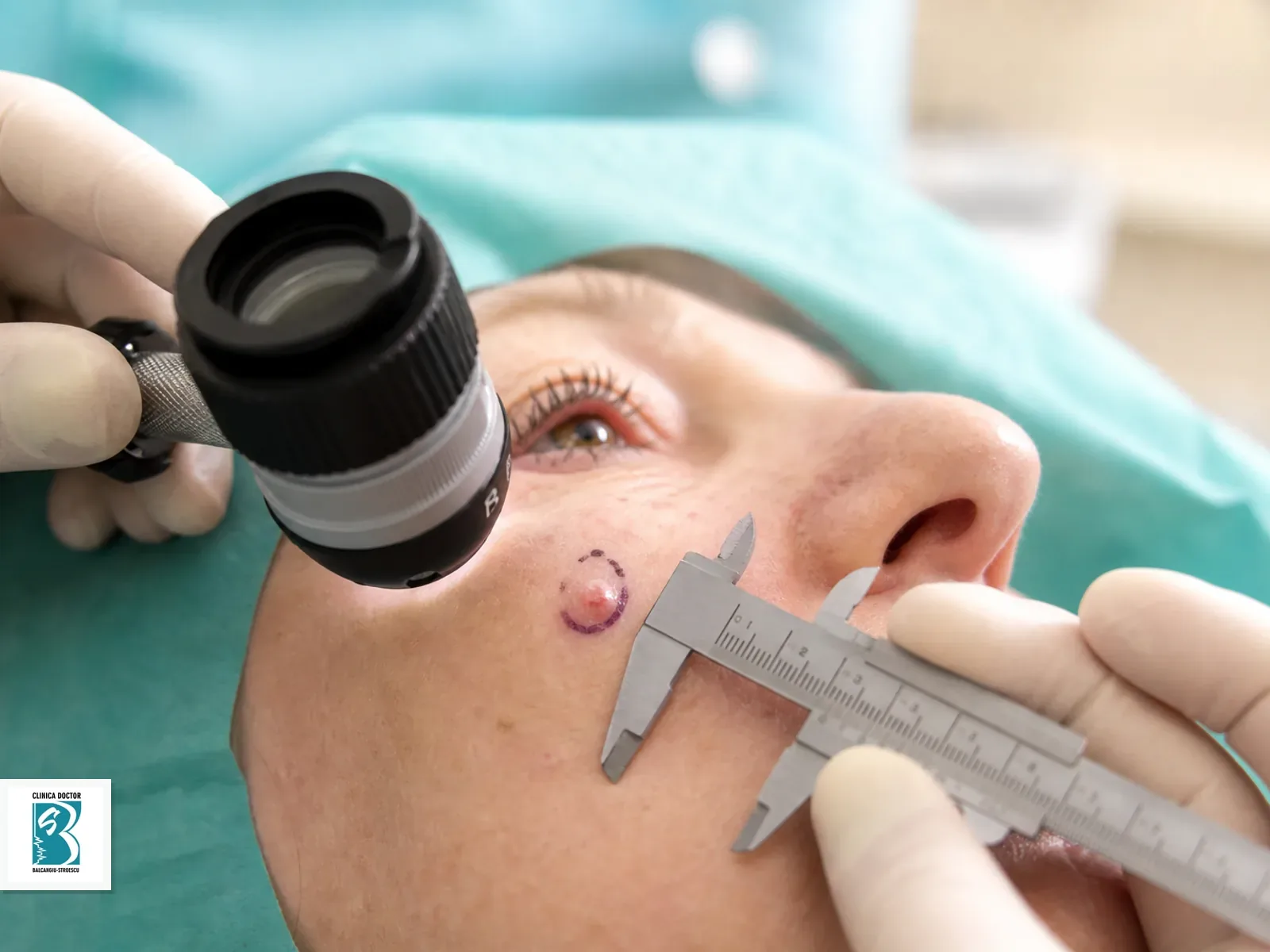
Procedural image for Chirurgie carcinom bazocelular medic primar, with a suspicious skin lesion and precise surgical marking.
Cutaneous oncologic surgery
Available at:
Basal cell carcinoma is the most common form of skin cancer and develops at the level of the basal cells of the epidermis. Although it usually progresses slowly and rarely metastasizes, this cutaneous tumor can become locally invasive if not treated promptly.
Basal cell carcinoma most frequently appears on areas of skin chronically exposed to ultraviolet radiation, such as the face, nose, eyelids, scalp, ears, or neck. Risk factors include prolonged sun exposure, repeated sunburns, fair skin phototype, advanced age, and history of skin lesions.
Lesions can have various clinical appearances, including pearly nodules, erythematous plaques, or ulcerations that heal with difficulty. For this reason, dermatological evaluation and early diagnosis are essential.
The main treatment for basal cell carcinoma is surgical excision of the lesion. This procedure involves complete removal of the tumor along with a margin of safety of healthy tissue, to reduce the risk of recurrence.
During the medical consultation, the physician evaluates the size of the lesion, its localization, and skin characteristics. Based on this evaluation, a personalized treatment plan is established, adapted to each patient.
Patient trust
5.0 / 5 from 31 published patient reviews
FREQUENTLY ASKED QUESTIONS
TEAM