
Useful information
Hyaluronic Acid or Botox? How to Choose the Right Treatment for Wrinkles and Facial Rejuvenation
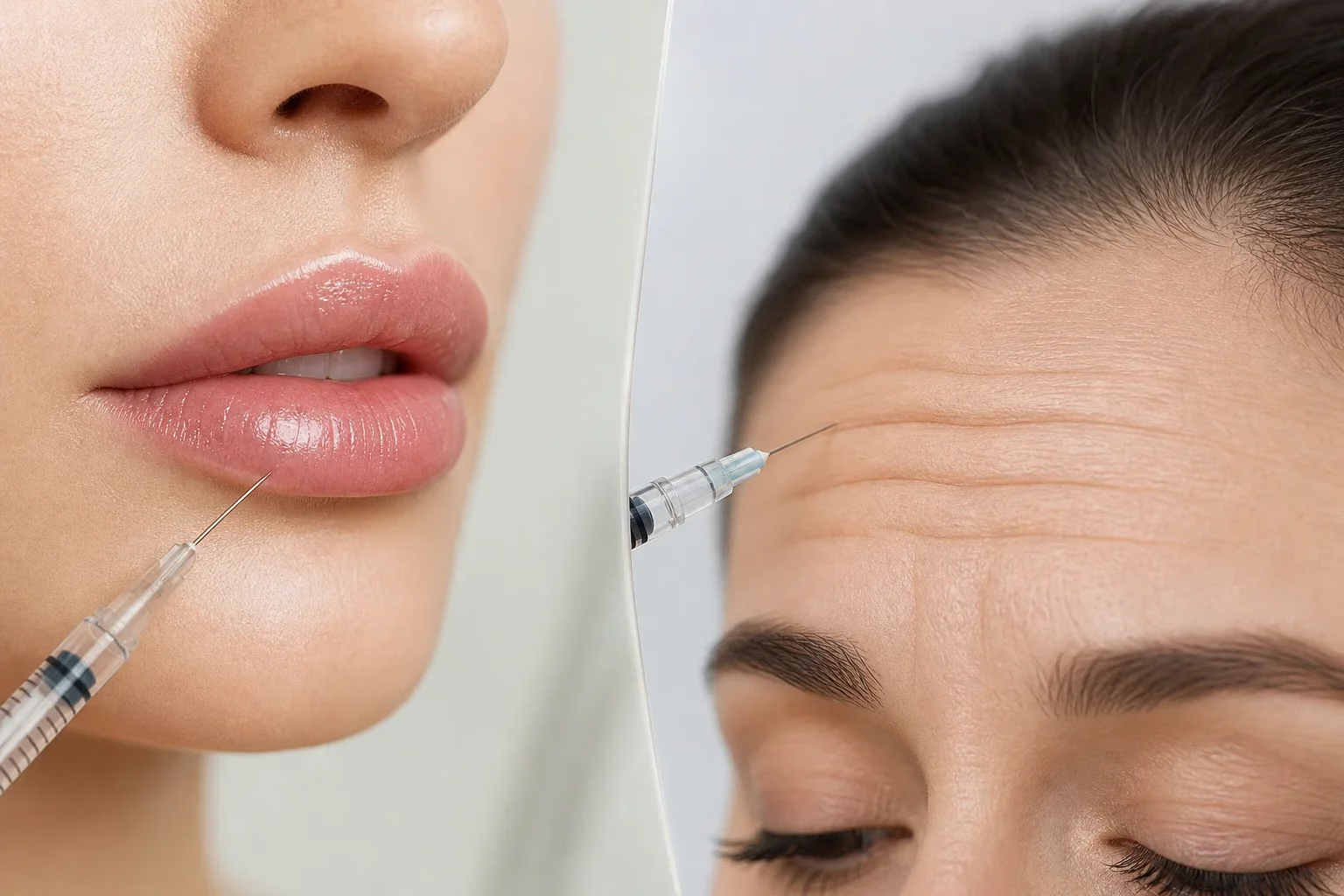
“Hyaluronic acid or Botox?” is the first question many patients ask when they visit the clinic. Today, we discuss: • The difference between botulinum toxin and hyaluronic acid dermal fillers. • Which treatment is suitable for expression lines, loss of facial volume, and lip contouring. • How long the results last, what the risks are, and why a medical consultation is essential.
Patient Guide
Two treatments, different mechanisms.
Botulinum toxin and dermal fillers are among the most widely used injectable treatments in aesthetic dermatology. Although they are often mentioned together, the two procedures have different mechanisms of action and indications.
Botulinum toxin type A temporarily reduces contraction of the targeted muscles, helping to soften expression lines.
Dermal fillers, particularly those based on hyaluronic acid, are used to restore or add volume, improve contours, and correct certain facial folds and depressions.
The choice should be based on the aesthetic goal, facial anatomy, and medical assessment. In some situations, the two treatments may complement each other.
Key points
- Botox acts on muscle activity and is primarily indicated for dynamic wrinkles, such as glabellar, forehead, and periocular lines.
- Fillers add or restore volume and, depending on the product and its indication, are used for the lips, certain facial folds, and correction of volume loss.
- Both are medical procedures with associated risks. Product selection, injection technique, and knowledge of facial anatomy are essential for safety.
In this article
01
Botox: When Is It Indicated and How Does It Work?
The popular name “Botox” is frequently used for botulinum toxin treatments, although Botox is a brand name. In aesthetic practice, authorised botulinum toxin type A products are used and must be administered according to the characteristics and indications of each product.
What types of wrinkles does it treat?
Botulinum toxin temporarily inhibits the release of acetylcholine at the neuromuscular junction, reducing contraction of the injected muscles. It can therefore diminish wrinkles that appear or become more pronounced during facial movements.
Common aesthetic indications include:
• Glabellar lines between the eyebrows. • Horizontal forehead lines. • Periocular lines, known as “crow’s feet.”
Its effect on static wrinkles, which are also visible at rest, may be more limited, particularly when they are deep or associated with structural changes in the skin.
When do the results appear, and how long do they last?
The effect generally begins within the first few days after injection, and the result develops progressively. When treating facial wrinkles, the effect often lasts approximately 3–4 months, with variations depending on the product, dose, treated area, and individual characteristics.
Treatment goals are agreed upon with the doctor. Some patients want a “frozen face” appearance, with movement eliminated completely. Other patients want to retain a natural appearance, preserving a certain degree of muscle movement and expressiveness without completely immobilising the face.
What are the risks?
Adverse reactions may include local pain, erythema, bruising, and headache. In some situations, eyelid or eyebrow ptosis may occur, usually temporarily. Serious systemic events are very rare, but symptoms such as difficulty swallowing, speaking, or breathing require emergency medical assessment.
02
Hyaluronic Acid Filler: When Is It the Right Choice?
Dermal fillers are injectable products designed to alter tissue volume or contour. Hyaluronic acid is one of the materials commonly used, but fillers with other compositions also exist and have different properties and risk profiles.
What can a filler correct?
Depending on the product, the area being treated, and the medical assessment, filler may be used for:
• Increasing lip volume and defining the lip contour. • Correcting certain facial folds and depressions. • Selectively restoring volume in the cheekbone, temple, or chin area, or in other suitable facial areas. • Correcting certain asymmetries and improving particular facial proportions.
However, filler is not a universal solution for all signs of ageing. For example, significant skin laxity, uneven texture, or wrinkles caused predominantly by muscle contraction may require other approaches.
When do the results appear, and how long do they last?
The volumetric result is generally visible immediately, but post-procedure swelling may temporarily alter the appearance of the treated area. The effect lasts between 6 and 24 months, but this varies depending on the composition and characteristics of the product, the injected area, the amount used, and individual metabolism. Therefore, there is no single duration that applies to all fillers.
Some hyaluronic acid fillers can be broken down with hyaluronidase when clinically indicated. However, this does not guarantee a straightforward correction in every situation and does not eliminate the need to prevent complications.
What risks should you be aware of?
Common reactions include swelling, bruising, tenderness, and local pain. Nodules, infections, inflammatory reactions, or migration of the material may also occur.
A rare but serious complication is accidental intravascular injection, which can cause vascular occlusion, ischaemia, and tissue necrosis. In some situations, visual disturbances, including vision loss, may occur. Unusual or increasing pain, blanching or a net-like change in skin colour, and any visual symptom occurring after injection require immediate assessment.
Because of these risks, filler injections must be performed by qualified medical professionals who can recognise and treat complications at an early stage.
03
Can the Two Treatments Be Combined?
Yes. In selected cases, botulinum toxin and filler may form part of the same treatment plan. For example, botulinum toxin may reduce dynamic wrinkles, while filler may correct clinically relevant volume loss.
However, combining them is not mandatory and is not always the optimal choice. The indication, order of procedures, and interval between them are determined individually, based on anatomy, goals, and risk assessment.
A conservative approach that prioritises the correct indication and avoids overcorrection may contribute to a harmonious result and reduce unnecessary procedures.
Final takeaway
Conclusion
Botox and filler are not competing treatments but procedures with different mechanisms and indications: the former temporarily reduces muscle activity, while the latter alters tissue volume and contour. The appropriate treatment depends on the cause of the aesthetic concern, facial anatomy, and individual goals. Schedule a dermatology consultation to determine which procedure is indicated in your case and to discuss its benefits, limitations, and risks.
Medical information notice
This material is for informational purposes and does not replace a medical consultation, diagnosis, or personalised recommendation from a doctor.
Frequently asked questions
Are the lips injected with Botox?
No. Lip augmentation is performed with filler. However, there is a technique for subtly augmenting the lips by injecting botulinum toxin above or below them, commonly known as a “lip flip.”
Is Botox the same as hyaluronic acid?
No. Botulinum toxin temporarily reduces contraction of the targeted muscles, while injectable hyaluronic acid is used to add or restore volume and alter certain contours.
Which treatment provides faster results?
Filler generally produces an immediately visible volumetric change, although swelling may affect the initial appearance. The effect of botulinum toxin develops progressively within the first few days after injection.
Medical sources
- 1
Wrinkles: Cosmetic treatment options.
American Academy of Dermatology Association
- 2
Botulinum toxin therapy: FAQs.
American Academy of Dermatology Association
- 3
Fillers: Overview.
American Academy of Dermatology Association
Continue reading
Related medical articles

The Scale Is Going Down. But What Are You Actually Losing?
Weight loss does not automatically mean losing only fat. Depending on diet, physical activity, and the pace of the process, the body may also lose water or muscle mass. In this article, you will learn why body composition matters, how muscle can be protected, and which methods we can use to monitor progress beyond the number on the scale.
Cellulite: Why Does It Occur and Which Treatments Can Improve the Appearance of the Skin?
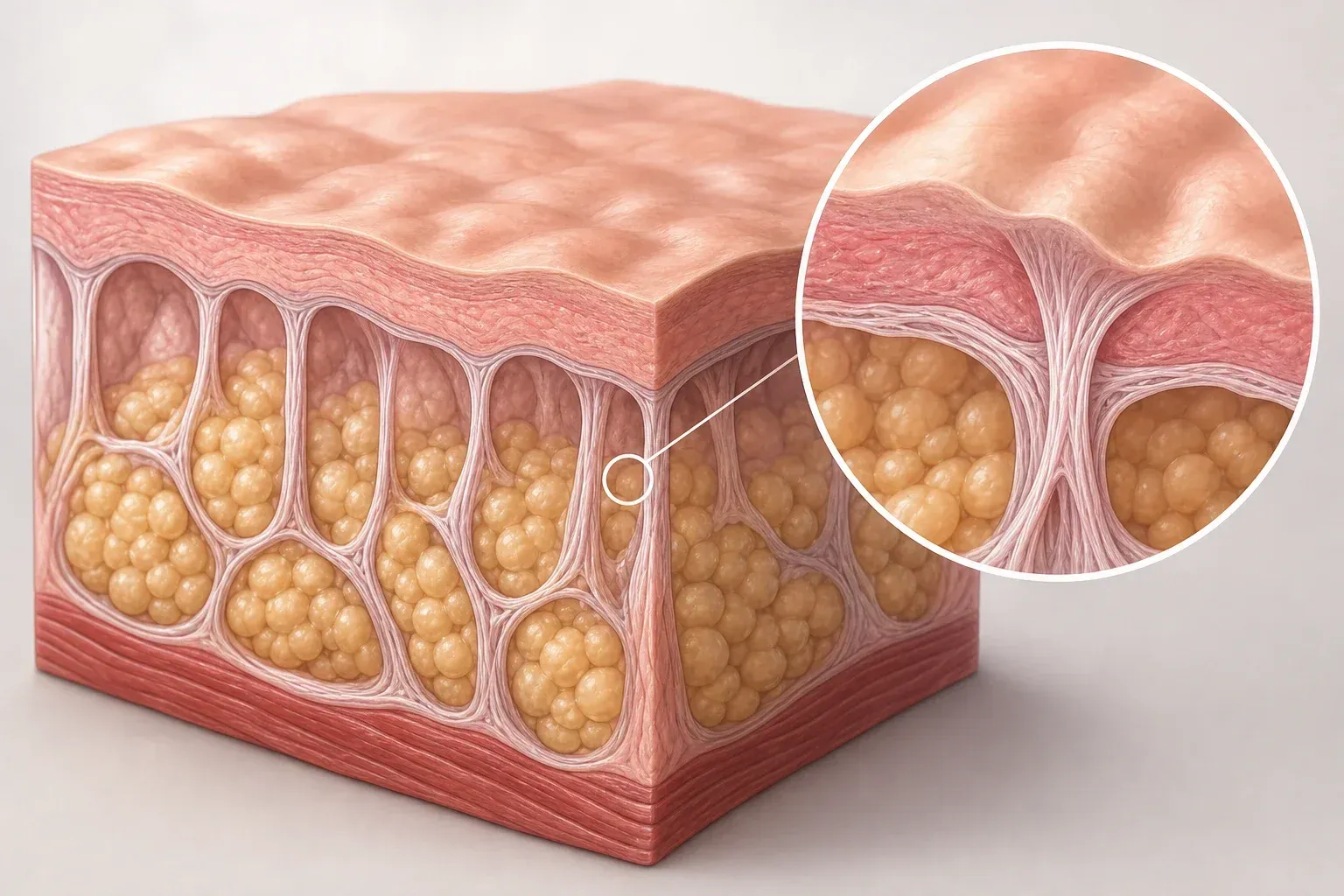
Today, we will discuss: • Why cellulite occurs and why it may be present even in people who are slim or physically active. • Which treatment options are available, from radiofrequency and acoustic wave therapy to procedures that release the fibrous septa. • What results can realistically be achieved and how to choose the right treatment for you.

Protein After 40: How Much Is Enough?
After the age of 40, the body does not suddenly lose its ability to preserve muscle mass, but it becomes increasingly important to provide it with two essential elements: the stimulus provided by strength training and the protein needed for recovery and adaptation. In this article, you will learn how much protein we need, how we can distribute it throughout the day, and why maintaining muscle strength is essential for metabolism, mobility, and long-term independence.