

Useful information
Abdominal Fat: When Does It Become a Health Risk?
Abdominal fat, particularly visceral fat accumulated around the organs, is associated with a higher risk of insulin resistance, type 2 diabetes, fatty liver disease, and cardiovascular disease. Below, we explain why fat distribution may matter more than weight, how to measure waist circumference correctly, which values indicate increased risk, and what changes may help reduce it.
Patient Guide
Two people may have the same weight and body mass index but very different metabolic risks. The explanation lies, at least in part, in where the body stores fat.
Fat accumulated around the abdomen is not merely a cosmetic concern. When a significant proportion is located inside the abdominal cavity, around the organs, it may contribute to insulin resistance, type 2 diabetes, fatty liver disease, high blood pressure, and cardiovascular disease.
This is why, when assessing metabolic health, a measuring tape can sometimes tell us as much as a scale.
Key points
- Not all abdominal fat is the same.
- An increased waist circumference may be a visible sign of a deeper metabolic imbalance.
- BMI alone does not provide a sufficiently accurate picture of metabolic health.
In this article
01
Not All Abdominal Fat Is the Same
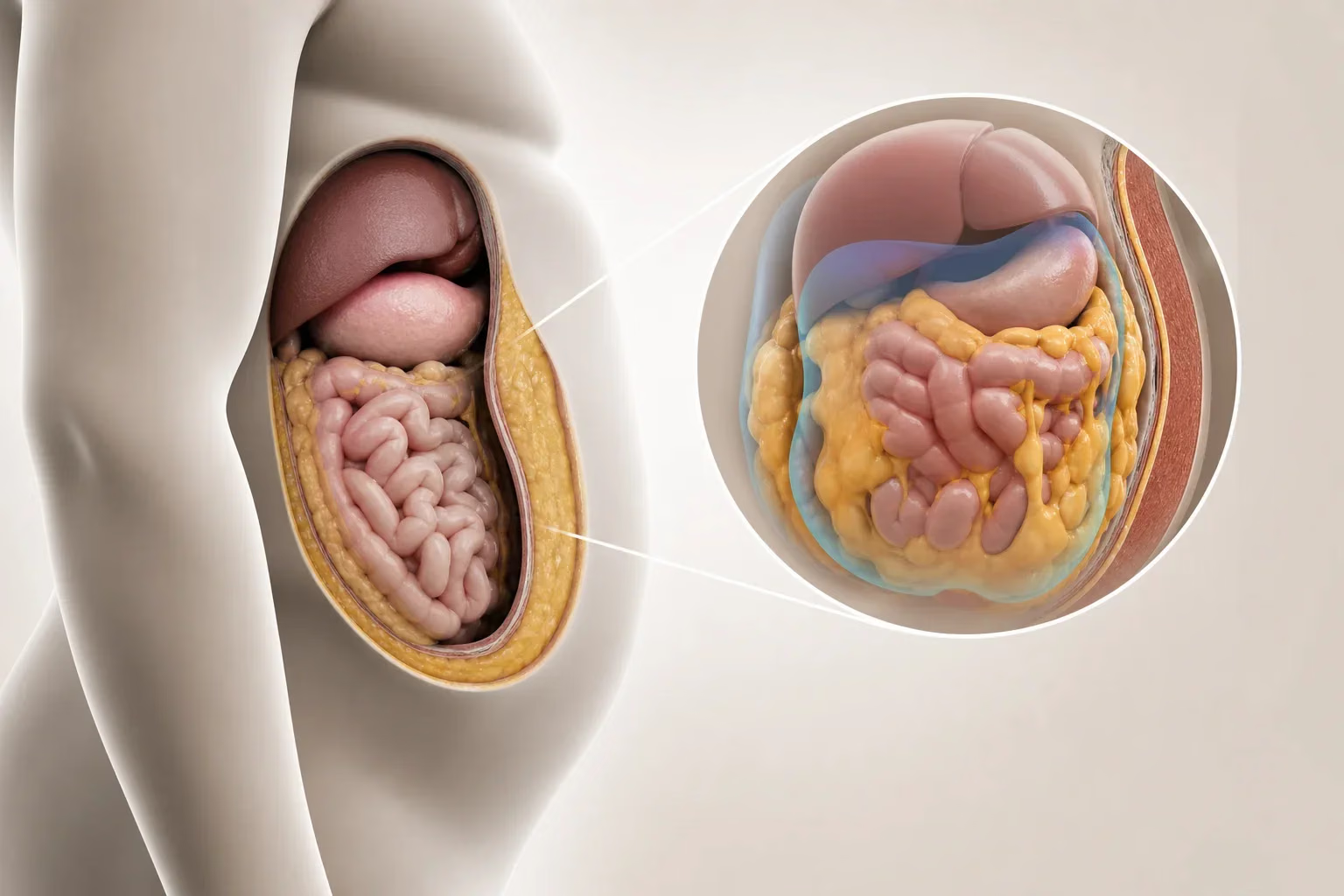
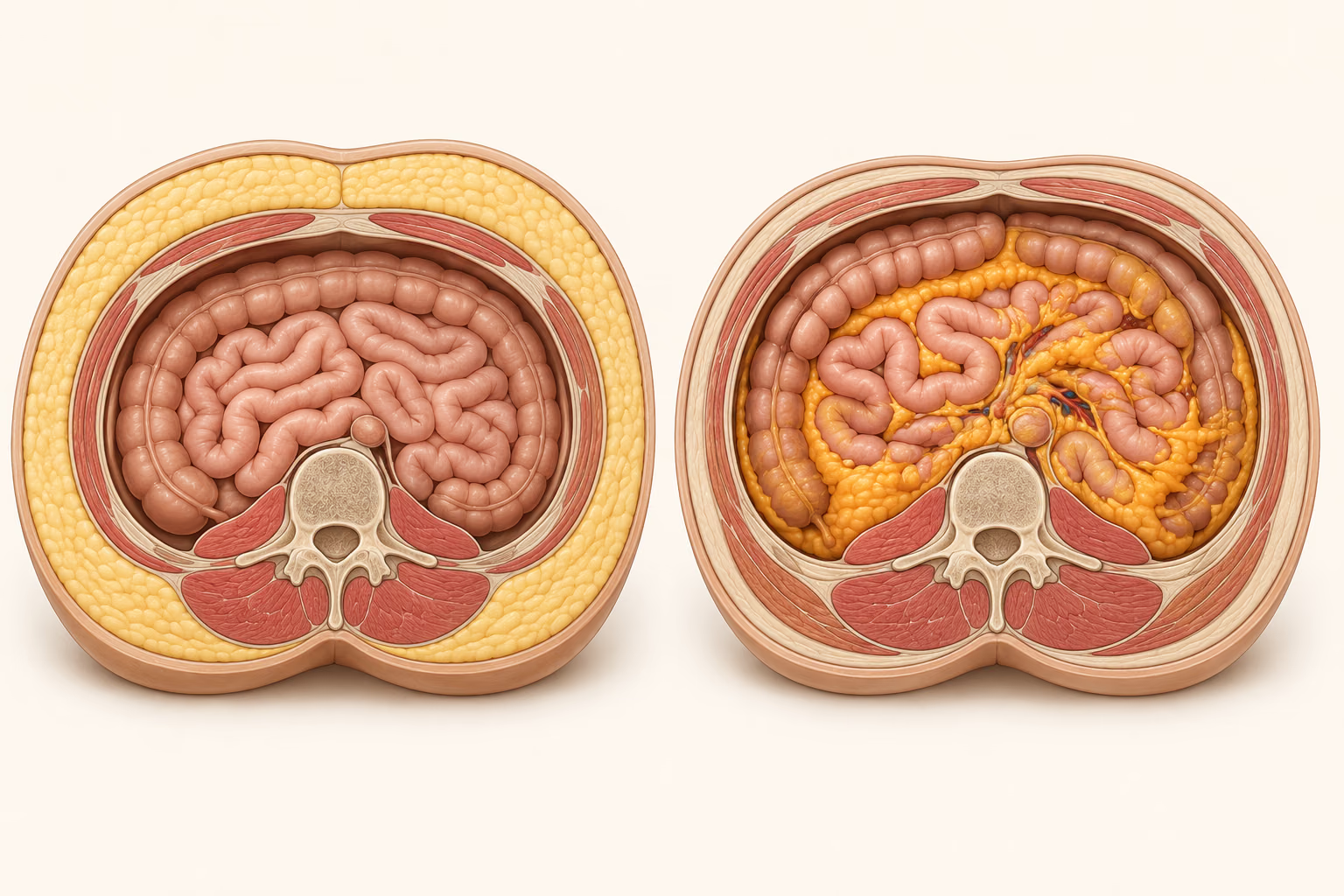
There are two main types of adipose tissue in the abdominal area:
- subcutaneous fat, located immediately beneath the skin, which we can pinch between our fingers; - visceral fat, located deeper in the body, around abdominal organs such as the liver, pancreas, and intestines.
Both contribute to waist circumference, but visceral fat is more metabolically active. It is not simply a passive energy store, but biologically active tissue capable of releasing fatty acids, hormones, and inflammatory mediators.
When it accumulates in excess, visceral adipose tissue may become dysfunctional: it releases more fatty acids into the bloodstream, sustains chronic low-grade inflammation, and interferes with the action of insulin. Over time, these changes may contribute to an unfavourable metabolic profile.
In addition, excess energy is not always stored only in adipose tissue. Fat may also accumulate in organs where it should normally be present only in small amounts—for example, in the liver, muscles, pancreas, or around the heart. These deposits are known as ectopic fat and may directly impair the function of the affected organs.
Therefore, predominantly abdominal fat accumulation is associated with a higher risk of: - insulin resistance and type 2 diabetes; - high blood pressure; - increased triglycerides and decreased HDL cholesterol; - metabolic dysfunction-associated steatotic liver disease—MASLD, previously known as “non-alcoholic fatty liver disease”; - obstructive sleep apnoea; - cardiovascular disease.
02
Why Does Fat Accumulate Around the Abdomen?
The distribution of adipose tissue is influenced by several factors, not only by the amount of food consumed. These include: - genetic predisposition; - age; - sex and hormonal changes; - menopause; - a sedentary lifestyle; - insufficient sleep; - chronic stress; - excessive alcohol consumption; - certain medications and endocrine conditions; - loss of muscle mass with age.
Before menopause, oestrogen more commonly promotes fat storage around the hips and thighs. As oestrogen levels decline, fat distribution may shift towards the abdomen, even if the change in total body weight is not very large.
Short and fragmented sleep may affect appetite, insulin sensitivity, and food choices. Stress also does not “create” abdominal fat on its own, but it may contribute through poorer sleep, emotional eating, and prolonged exposure to cortisol.
03
Why Does BMI Not Tell the Whole Story?
Body mass index—BMI—is calculated by dividing weight in kilograms by the square of height in metres. It is a simple and useful tool for assessing populations, but it has important limitations.
BMI cannot distinguish between: - fat mass and muscle mass; - subcutaneous and visceral fat; - abdominal and predominantly gluteofemoral fat distribution; - excess fat with or without metabolic impairment.
A person with substantial muscle mass may have a high BMI without having a significant excess of adipose tissue. Conversely, someone may have a BMI considered normal but an increased waist circumference and low muscle mass. In this case, metabolic risk may be underestimated if the assessment stops at the scale.
For this reason, current recommendations suggest interpreting BMI together with waist circumference or the waist-to-height ratio. People with similar BMI values may have different cardiometabolic risks, and measures of central adiposity may complement the assessment.
For the most meaningful waist circumference measurement possible: 1. Use a flexible measuring tape and measure directly against the skin or over very thin clothing. 2. Stand upright, with the abdomen relaxed and weight distributed evenly across both feet. 3. Position the tape horizontally, midway between the lowest palpable rib and the upper edge of the iliac crest. 4. Do not tighten the tape or “suck in” your stomach. 5. Read the measurement at the end of a normal exhalation.
It is important to use the same method and, ideally, to measure under similar conditions each time. A difference of one or two centimetres from one day to the next may be influenced by bloating, bowel movements, or how the tape was positioned. The trend observed over time is more relevant than a single isolated measurement.
Which values indicate increased risk? For the European population, the International Diabetes Federation uses the following thresholds for abdominal obesity:
Women Men Increased cardiometabolic risk ≥80 cm ≥94 cm
These values should not be interpreted as a rigid boundary between “healthy” and “ill.” Risk increases progressively with waist circumference and should be assessed in the context of blood pressure, blood glucose, lipid profile, family history, smoking, physical activity, and any existing medical conditions.

Final takeaway
Conclusion
Abdominal fat should not be viewed solely as a matter of appearance or as a measure of a person’s willpower. The distribution of adipose tissue is influenced by multiple factors, including biology, age, environment, and lifestyle.
At the same time, waist circumference is a simple indicator of metabolic health that can be easily monitored. Reducing it, maintaining muscle mass, and improving blood glucose, blood pressure, or lipid profile may represent important progress even if the number on the scale does not change quickly.
Perhaps the most useful question is not only “how much do I weigh?” but also “where is my weight distributed, and what does this say about my metabolic health?”
Medical information notice
This material is for informational purposes and does not replace a medical consultation, diagnosis, or personalised recommendation from a doctor.
Frequently asked questions
Can I eliminate abdominal fat through abdominal exercises alone?
No. Abdominal exercises strengthen the muscles, but they do not cause the body to burn fat from a specific area. Reducing abdominal fat requires a general approach combining a balanced diet, aerobic activity, and strength training.
What tests can I have to assess my visceral fat?
Waist circumference is the simplest method for an initial assessment. Body composition analysis using bioelectrical impedance, such as the InBody assessment available at the clinic, can estimate visceral fat levels and allow changes to be monitored over time. Tests such as DEXA, MRI, or computed tomography may be used for a more precise measurement, but they are not routinely recommended solely for this purpose.
Can I have too much visceral fat even if I have a normal weight?
Yes. A normal BMI does not rule out fat accumulation around the organs, particularly when waist circumference is increased and muscle mass is low. For this reason, weight and BMI should not be the only criteria used to assess metabolic health.
Medical sources
- 1Waist circumference as a vital sign in clinical practice: a Consensus Statement from the IAS and ICCR Working Group on Visceral Obesity.
Nature Reviews Endocrinology, 2020.
- 2Waist Circumference and Waist–Hip Ratio: Report of a WHO Expert Consultation.
World Health Organization.
- 3Obesity and cardiovascular disease: an ESC clinical consensus statement.
European Heart Journal, 2024.
- 4The IDF Consensus Worldwide Definition of the Metabolic Syndrome.
International Diabetes Federation
- 5
Continue reading
Related medical articles

Retinoids in Skin Care: A Complete Guide for Patients
This article explains what retinoids are, the differences between retinoid derivatives, how they act in the skin, their scientifically proven benefits (acne, signs of aging, texture), how to introduce them correctly into a routine, and the questions that most commonly arise before a dermatology consultation.

CTX310: What the First Human Results Mean for Cholesterol
CTX310 is an investigational intravenous CRISPR therapy. In a 15-participant phase 1 study, the four-person 0.8 mg/kg cohort had mean day-60 reductions of 48.9% in LDL cholesterol and 55.2% in triglycerides; it is not an approved treatment.