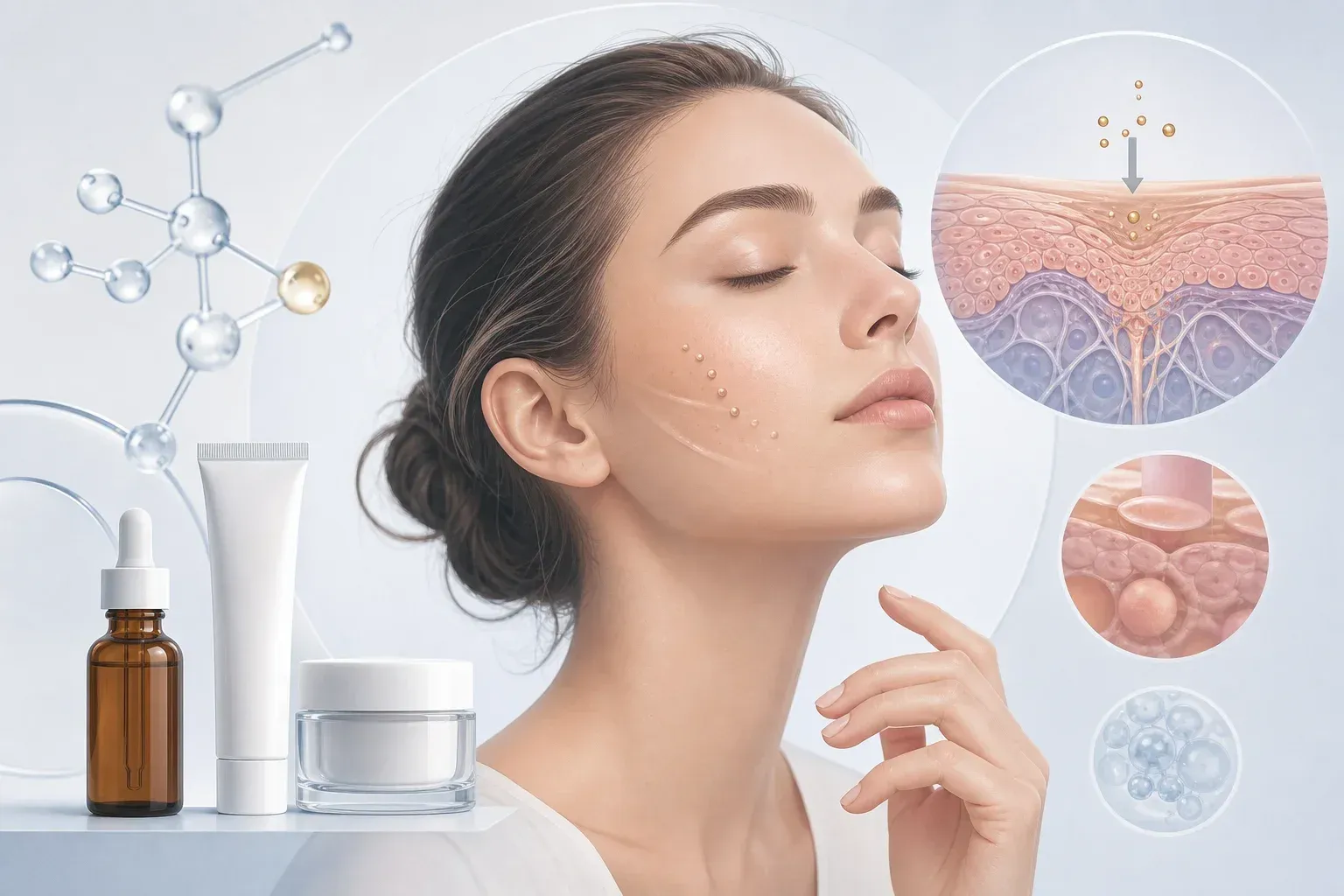
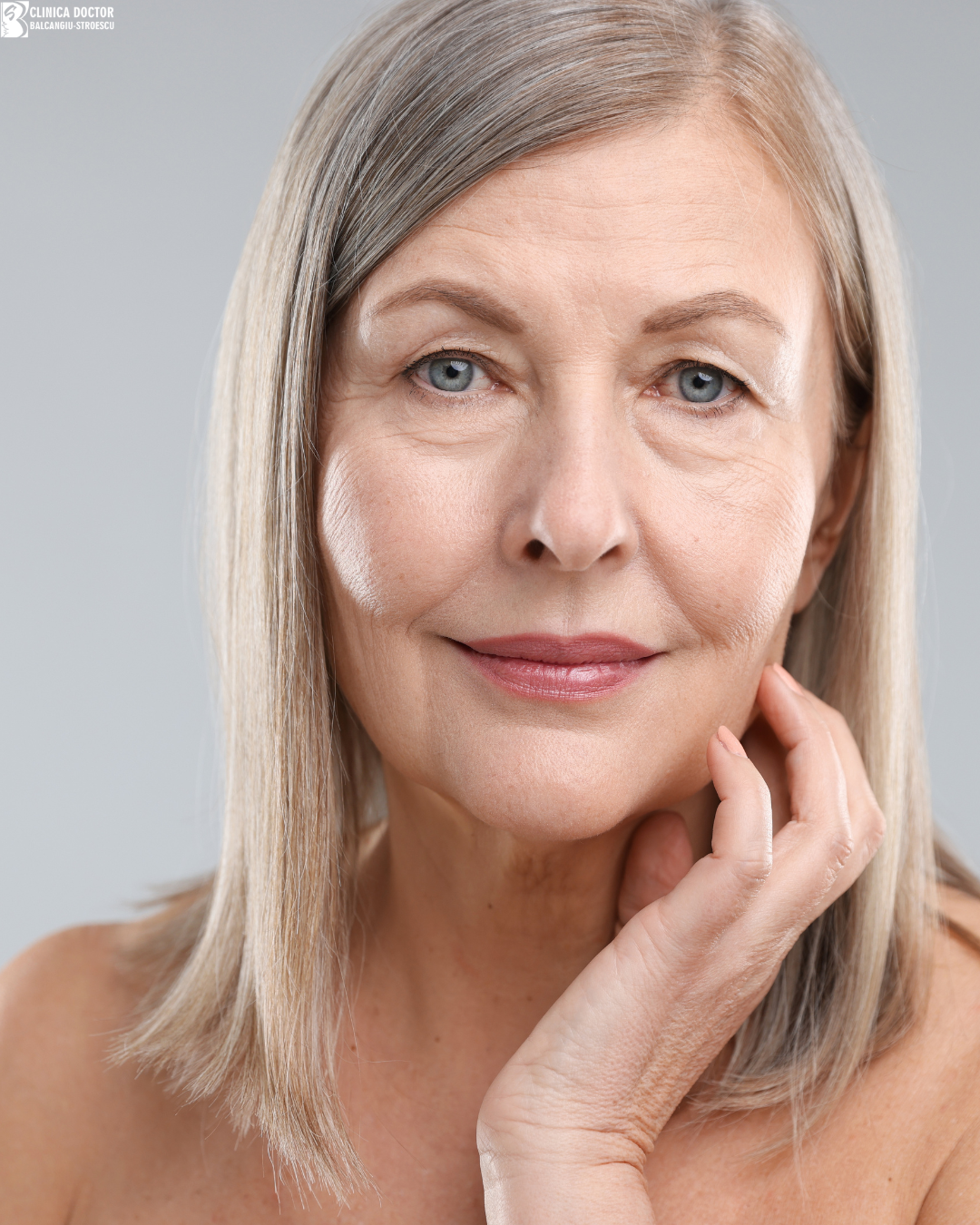
Facial rejuvenation represents a set of dermatological and aesthetic procedures aimed at improving skin appearance, reducing signs of aging, and restoring radiance and elasticity to the complexion.
Facial aging is a complex, multifactorial biological process characterized by progressive changes at the cutaneous, subcutaneous, muscular, and osseous levels. This results from the interaction between intrinsic (chronological) and extrinsic (especially photoexposure) mechanisms, leading to degradation of the extracellular matrix, volumetric redistribution, and ptosis of soft tissues. An integrated understanding of these processes is essential for modern therapeutic approach.
Aesthetic medicine offers today numerous minimally invasive solutions for skin rejuvenation.
Facial rejuvenation represents a set of dermatological and aesthetic procedures aimed at improving skin appearance, reducing signs of aging, and restoring radiance and elasticity to the complexion.
Facial aging is a complex, multifactorial biological process characterized by progressive changes at the cutaneous, subcutaneous, muscular, and osseous levels. This results from the interaction between intrinsic (chronological) and extrinsic (especially photoexposure) mechanisms, leading to degradation of the extracellular matrix, volumetric redistribution, and ptosis of soft tissues. An integrated understanding of these processes is essential for modern therapeutic approach.
Aesthetic medicine offers today numerous minimally invasive solutions for skin rejuvenation.
Why skin ages
The process of skin aging is influenced by multiple factors: intrinsic (natural, chronological aging), which are genetically determined, as well as extrinsic (aging induced by environmental factors). Intrinsic aging is manifested by a decrease in natural production of collagen and elastin fibers, decreased skin regeneration capacity, and diminished skin hydration. Exposure to ultraviolet radiation is one of the main extrinsic factors responsible for premature skin aging. Repeated sun exposure can lead to wrinkle formation, pigmented spots, and loss of skin elasticity. Similarly, lifestyle can significantly influence skin health. Factors that can accelerate skin aging include:
- stress
- pollution
- smoking
- sleep deprivation
- unbalanced diet
Structural changes of the face
With advancing age, the deep structures of the face may lose volume and tone. The bone structure undergoes resorption processes, particularly at the level of the maxilla, mandible, and orbits, leading to loss of structural support and facial contour modification. Adipose compartments present both atrophy (particularly in the malar region) and hypertrophy or ptosis in other areas, determining uneven volume redistribution. The superficial musculo-aponeurotic system (SMAS) loses its tone and elasticity, contributing to descent of soft tissues. Facial ligaments become lax, facilitating downward migration of adjacent structures. This can lead to accentuation of nasolabial folds, accentuation of wrinkles, and modification of facial contour.
Common signs of facial aging
Signs of skin aging can vary from one person to another.
The most common include:
- fine lines and deep wrinkles
- loss of skin firmness- cutaneous laxity, facial ptosis
- diminished volumetry in the middle third of the face
- pigmented spots
- non-uniform skin texture
- dull complexion
These changes appear gradually and may become more visible with advancing age.
Modern procedures for skin rejuvenation
In aesthetic dermatology there are numerous procedures used for improving the aged appearance of skin.
Topical therapies
Topical treatment represents the basis of prevention and is frequently used in early stages of aging. Topical retinoids are considered the gold standard, due to their ability to stimulate collagen synthesis and inhibit its degradation. Antioxidants, such as vitamin C and vitamin E, reduce oxidative stress and help prevent photoaging. Hydroxy acids induce controlled exfoliation and stimulate epidermal regeneration, while photoprotection remains essential in limiting the effects of ultraviolet radiation.
Injectable procedures
Injectables represent a central component of modern anti-aging therapy. Botulinum toxin is used for treatment of dynamic wrinkles, by inhibiting muscle contraction. Dermal fillers, particularly those based on hyaluronic acid, allow restoration of lost volume and correction of facial folds. Biostimulators, such as poly-L-lactic acid or calcium hydroxyapatite, induce neocollagenesis and provide progressive and long-lasting results. Also, mesotherapy involves injection of active substances (growth factors, vitamins, hydrating agents) into the skin to stimulate deep hydration and regeneration. Platelet-rich plasma (PRP) contains growth factors that stimulate dermal regeneration and collagen synthesis.
Energy-based technologies
Modern devices allow dermal remodeling and induction of non-surgical lifting effect. Fractional lasers, both ablative and non-ablative, produce controlled microinjuries that stimulate tissue regeneration and collagen synthesis. Radiofrequency, including in combination with microneedling, causes deep dermal heating, favoring collagen contraction and neocollagenesis. High-intensity focused ultrasound (HIFU) acts at a deep level, including on the superficial musculo-aponeurotic system, contributing to tissue lifting.
Chemical peels
Chemical peels, classified as superficial, medium, and deep, determine controlled exfoliation and epidermal regeneration. These are effective in improving skin texture, fine wrinkles and pigmentary disorders, and are often integrated into combined protocols.
Benefits of rejuvenation procedures
Modern aesthetic medicine procedures offer numerous benefits.
These include:
- improvement of skin appearance
- wrinkle reduction
- increased skin elasticity
- brighter and more uniform complexion
- natural results
Most of these procedures are minimally invasive and do not require long recovery periods.
Importance of dermatological consultation
Each patient has different skin characteristics and facial structure. Therefore, the treatment plan must be tailored individually.
Dermatological consultation allows evaluation of:
- skin type
- degree of skin aging
- facial structure
Based on this evaluation, the doctor can recommend the most suitable procedures.
Recommendations for maintaining skin health
In addition to aesthetic procedures, certain habits can contribute to maintaining healthy-looking skin.
It is recommended:
- use of sun protection
- proper hydration
- balanced diet
- avoidance of smoking
- proper skin care at home, through a simple but effective routine
These measures can slow down the aging process of the skin.
Conclusion
Facial aging is a complex process, determined by intrinsic and extrinsic factors, affecting all anatomical structures of the face. Modern therapeutic approach requires an integrated understanding of these mechanisms, with the aim of restoring both the quality of the skin and the volume and structural support of the face. Technological advances and the development of regenerative therapies offer varied, effective therapeutic options that are increasingly less invasive, with natural and lasting results.
To establish a personalized treatment plan and to choose appropriate procedures, medical evaluation is recommended during a dermatological consultation.