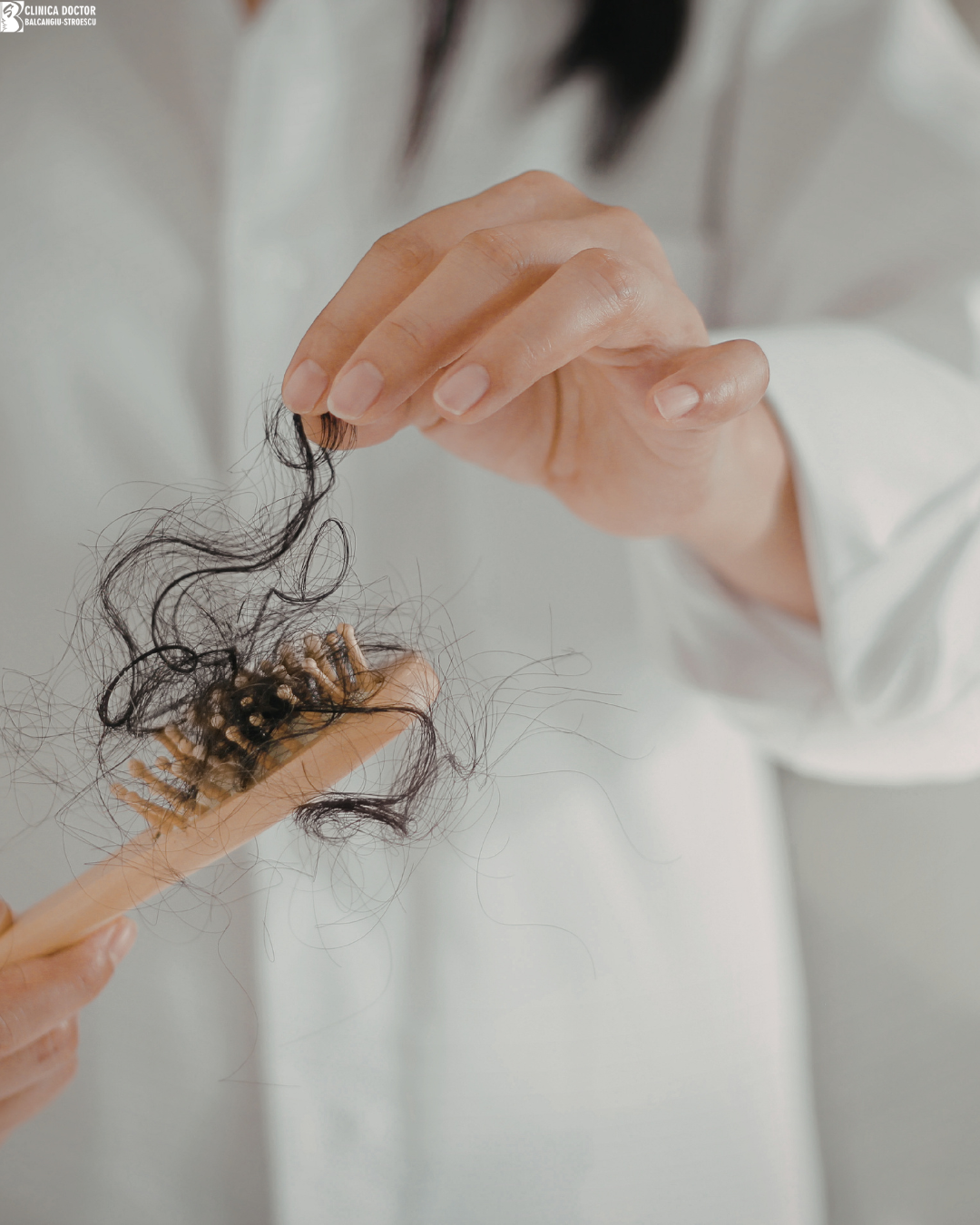
Hair loss is a frequent problem that can affect both men and women. Although it is normal for a person to lose a certain number of hair strands daily, when hair loss becomes excessive or appears in the form of visible thinning areas, this may indicate a dermatological or medical problem.
Hair loss can have numerous causes, and identifying them is essential for establishing appropriate treatment.
When is hair loss considered abnormal
Normally, a person loses approximately 50–100 hair strands per day, as part of the natural hair regeneration cycle.
Hair loss becomes concerning when:
- progressive thinning of hair is observed
- hairless areas appear on the scalp
- hair falls out in large quantities during combing or washing
- hair strands become thinner and more fragile
In these situations, dermatological consultation is recommended.
Causes of hair loss
There are numerous factors that can cause hair loss.
Androgenetic alopecia
This is the most common form of hair loss and has a genetic component.
In men it manifests through hairline recession and hair thinning in the frontal and vertex areas. In women it usually appears as diffuse hair thinning in the central area of the scalp.
Stress
Physical or emotional stress can cause a form of temporary hair loss called telogen effluvium.
This occurs when a large number of hair strands prematurely enter the shedding phase.
Nutritional deficiencies
Deficiency of important nutrients can affect hair health. Among the most important are:
- iron
- zinc
- vitamin D
- proteins
Hormonal disorders
Hormonal imbalances can affect the hair growth cycle. Examples include:
- thyroid disorders
- polycystic ovary syndrome
Dermatological conditions of the scalp
Some scalp diseases can cause hair loss, such as:
- seborrheic dermatitis
- scalp psoriasis
- fungal infections
Types of hair loss
Hair loss can appear in several forms.
Androgenetic alopecia
It is the most common form and has a progressive course.
Telogen effluvium
It is characterized by diffuse hair loss, usually a few months after a stressful event, illness, or surgery.
Alopecia areata
This form appears suddenly and manifests through the appearance of round hairless areas
Investigations for hair loss
To determine the cause, the dermatologist may recommend certain investigations.
These may include:
- dermatological examination of the scalp
- dermoscopy of the scalp
- blood tests
- evaluation of vitamin or hormone levels
These investigations help identify the cause and establish appropriate treatment.
Treatment options
Treatment depends on the cause of hair loss.
Topical treatment
Some topical treatments can be applied directly to the scalp to stimulate hair growth and reduce shedding.
Medicinal treatment
In certain situations, the physician may recommend medicinal treatment to control hair loss.
Dermatological procedures
Some dermatological therapies can help stimulate hair growth and improve scalp health.
These procedures are individually established by the dermatologist.
Recommendations for hair health
To maintain hair health, it is recommended:
- a balanced diet
- stress reduction
- avoiding aggressive hair treatments
- use of products appropriate for scalp type
When to consult a dermatologist
Dermatological consultation is recommended when:
- hair loss is excessive
- hairless areas appear
- hair becomes increasingly thinner
- the problem persists for several months
Medical evaluation allows identification of the cause and establishment of appropriate treatment.
Conclusion
Hair loss is a frequent problem, but in many cases treatable. Identifying the cause is essential for choosing the correct treatment.
Dermatological consultation and medical evaluation both contribute to establishing a personalized treatment plan and maintaining scalp and hair health.