
Useful information
Hair Loss in Women: Causes, Diagnosis, and Treatment Options
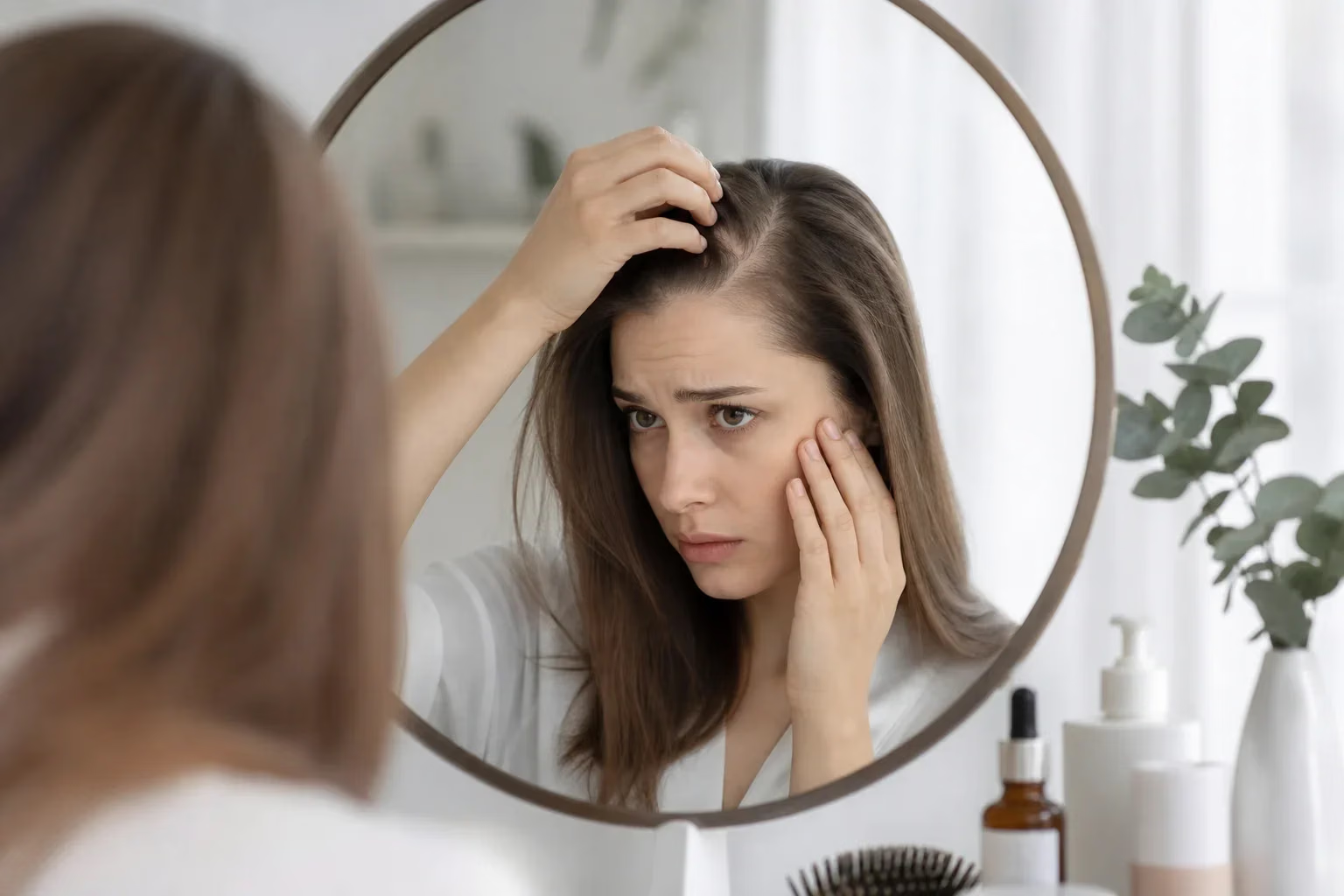
Hair loss in women can have very different causes, ranging from telogen effluvium following physiological stress to female pattern hair loss or inflammatory scalp conditions. Correctly identifying the cause is essential because treatment differs significantly from one form of alopecia to another.
Patient Guide
It is normal to lose between 50 and 100 hairs each day because they are naturally in different stages of the hair follicle cycle. A problem may arise when hair loss becomes noticeably more substantial, persists, or is accompanied by a progressive reduction in hair density.
In women, two of the most common causes of diffuse hair loss are telogen effluvium and female pattern hair loss (FPHL). These conditions can occur separately, but they can also occur together. In addition, some patients may have thyroid disorders, iron deficiency, hyperandrogenism, alopecia areata, or inflammatory and scarring forms of alopecia that require a different approach.
Key points
- Hair loss does not have a single cause.
- The pattern of hair loss provides important information.
- Treatment works over time and only for as long as it is continued.
In this article
01
What are the main causes of hair loss in women?
The two main causes of hair loss in women are telogen effluvium and female pattern hair loss.
Telogen effluvium
Telogen effluvium is characterized by an increase in the number of hairs that prematurely enter the telogen phase of the hair follicle cycle, followed by diffuse hair shedding.
It may occur several months after a trigger such as: - fever or a significant infection; - surgery; - childbirth; - significant physiological stress; - rapid weight loss or insufficient calorie intake; - certain medications; - iron deficiency or other nutritional disorders, when present.
A characteristic feature is the relatively sudden onset of diffuse hair shedding without a clearly defined area of baldness. In many cases, hair density may recover after the trigger is addressed, but the process is slow because the hair follicle cycle takes place over several months.
Female pattern hair loss
Female pattern hair loss, also known as female androgenetic alopecia, is a progressive condition in which susceptible follicles produce increasingly thinner and shorter hairs through a process of follicular miniaturization.
Typical manifestations include:
- progressive widening of the central part; - reduced hair density in the frontoparietal region; - thinning of the hair shafts; - sometimes, reduced overall hair density across the scalp.
The condition has a significant genetic component and may be influenced by hormonal factors. Women with female pattern hair loss do not necessarily have elevated androgen levels. However, when hirsutism, recent-onset acne, irregular menstrual cycles, or other signs of hyperandrogenism are present, an endocrinological assessment may be indicated.
Other causes
Not every case of diffuse hair loss is telogen effluvium or female pattern hair loss. Depending on the manifestations, the dermatologist may also consider alopecia areata, thyroid disorders, iron deficiency, medication effects, trichotillomania, or various forms of scarring alopecia.
The presence of redness, substantial scaling, pain, a burning sensation, intense itching, pustules, or areas where the follicular openings appear to be disappearing may suggest an inflammatory scalp condition and requires dermatological assessment. Early diagnosis is particularly important in scarring alopecias because destruction of the hair follicle may be permanent.
02
How is the cause of hair loss determined?
Diagnosis begins with a careful medical history. The dermatologist will assess when the hair loss began, how quickly it has progressed, and how it is distributed, and will ask about events in the preceding months, including febrile illnesses, surgery, childbirth, significant changes in weight, restrictive diets, medications, or hormonal changes.
Examining the scalp can provide essential information. Trichoscopy allows direct assessment of the hair shafts and scalp structures and may reveal, for example, the variation in hair shaft diameter that is characteristic of miniaturization in female pattern hair loss, or changes suggestive of other conditions.
Laboratory tests are not the same for every patient. They are recommended based on the medical history and clinical examination. In cases of diffuse hair loss without an obvious cause, iron status and thyroid function may be investigated, among other factors; if signs of hyperandrogenism are present, hormonal testing may become relevant.
In selected situations, when the diagnosis cannot be established clinically and through trichoscopy, or when scarring or inflammatory alopecia is suspected, a scalp biopsy may be necessary.
03
How is hair loss treated?
Treatment depends on the identified cause.
In telogen effluvium, the first objective is to identify and address the trigger. For example, if there is severe calorie restriction, significant weight loss, or a documented deficiency, these issues should be corrected. Taking supplements empirically without an identified medical indication is not recommended.
For female pattern hair loss, topical minoxidil has the most consistent supporting evidence and is frequently recommended as first-line therapy. Its effect is not immediate: assessing the response generally requires several months of continuous treatment. A temporary increase in shedding may occur at the start of treatment, and the effect achieved is maintained for as long as treatment is continued.
Depending on the patient, the dermatologist may also consider systemic treatments such as spironolactone or other off-label therapies, including low-dose oral minoxidil. The choice depends on age, hormonal status, comorbidities, concomitant medication, and the risk of adverse effects. Oral minoxidil and antiandrogen therapies require medical assessment and are not suitable for every patient.
There are also adjunctive therapies such as PRP, microneedling, or low-level light devices. Data suggest a possible benefit in certain cases, but the level of evidence and protocols vary, and these procedures should not replace medical treatment when it is indicated.
An important principle is that treatment must be tailored to the diagnosis. A treatment that is effective for female pattern hair loss is not automatically the appropriate treatment for telogen effluvium or inflammatory alopecia.
Final takeaway
Conclusion
Hair loss in women can have multiple causes, and distinguishing between telogen effluvium, female pattern hair loss, and other forms of alopecia is essential when selecting treatment. If hair loss persists, worsens, or is associated with scalp changes, a useful next step is a dermatology consultation that includes a scalp examination and, when necessary, trichoscopy and further investigations.
Medical information notice
This material is for informational purposes and does not replace a medical consultation, diagnosis, or personalized recommendation from a doctor.
Frequently asked questions
“Is it normal to lose hair every day?”
Yes. Under normal circumstances, we lose up to 100 hairs each day. Hairs are normally in different phases of the hair follicle cycle, so some daily hair loss is physiological. A dermatological assessment becomes important when shedding is noticeably increased and persistent, when there is a progressive reduction in density, or when scalp changes occur.
“How long does it take to see results from treatment?”
The response to treatment is assessed over months, not weeks. Hair shedding may temporarily increase at first, and stopping treatment may lead to loss of the benefit.
“Does minoxidil have to be used for life?”
In female pattern hair loss, the benefit of minoxidil depends on continuing treatment. If treatment is stopped, the effect achieved is progressively lost, and hair density may return toward its pretreatment level.
Medical sources
- 1
Telogen effluvium: a comprehensive review, 2019.
Clinical, Cosmetic and Investigational Dermatology
- 2
Hair loss: female pattern (androgenetic alopecia)
British Association of Dermatologists
- 3
Hair loss: Diagnosis and treatment
American Academy of Dermatology
Continue reading
Related medical articles
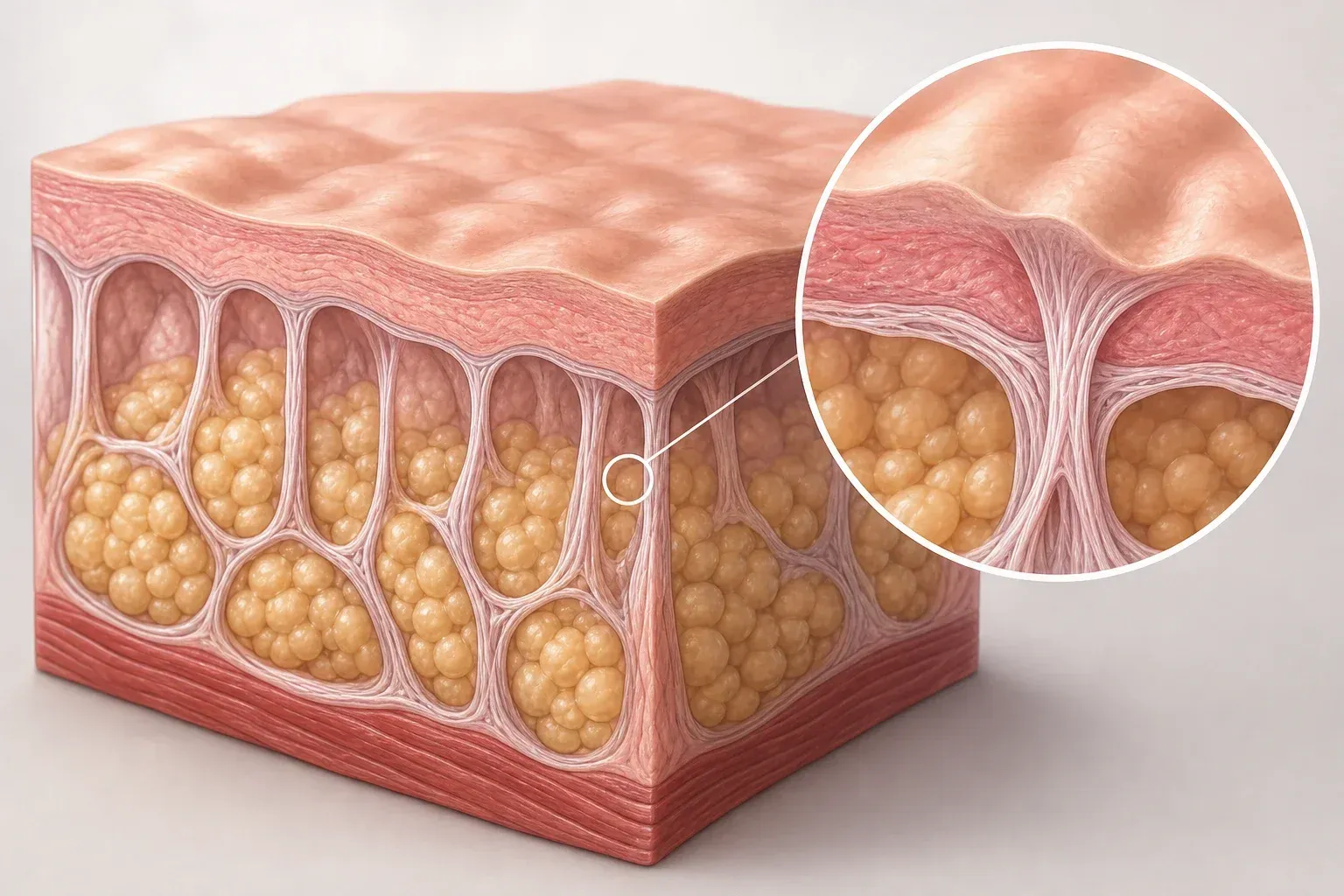
Cellulite: Why Does It Occur and Which Treatments Can Improve the Appearance of the Skin?
Today, we will discuss: • Why cellulite occurs and why it may be present even in people who are slim or physically active. • Which treatment options are available, from radiofrequency and acoustic wave therapy to procedures that release the fibrous septa. • What results can realistically be achieved and how to choose the right treatment for you.

Protein After 40: How Much Is Enough?
After the age of 40, the body does not suddenly lose its ability to preserve muscle mass, but it becomes increasingly important to provide it with two essential elements: the stimulus provided by strength training and the protein needed for recovery and adaptation. In this article, you will learn how much protein we need, how we can distribute it throughout the day, and why maintaining muscle strength is essential for metabolism, mobility, and long-term independence.
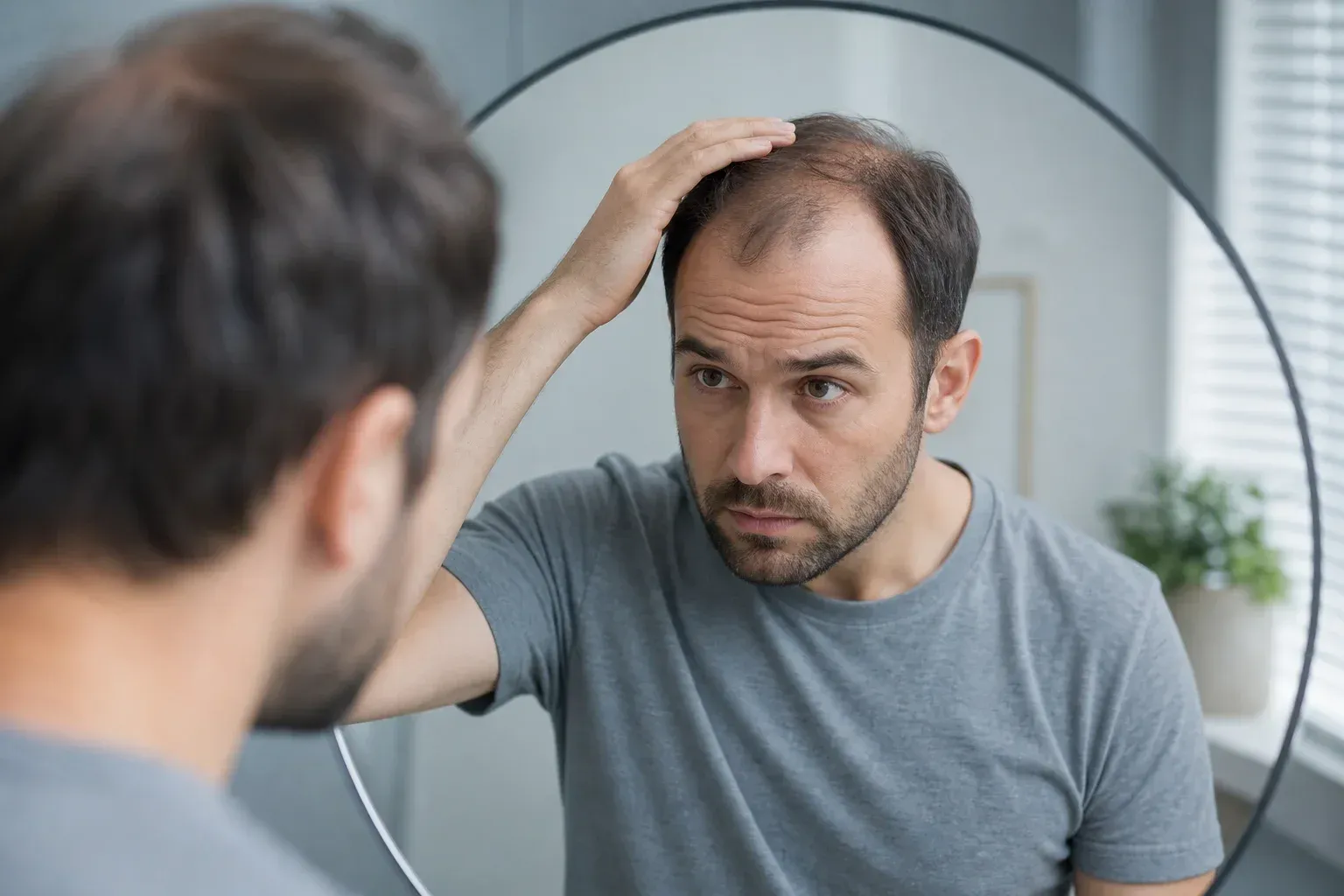
Hair Loss in Men: Causes, Diagnosis, and Treatment Options
Hair loss is common in men, but not all forms of alopecia have the same cause or require the same treatment. You will learn how to recognize the main signs of androgenetic alopecia, when a dermatology consultation is recommended, and which treatment options are best supported by research.