
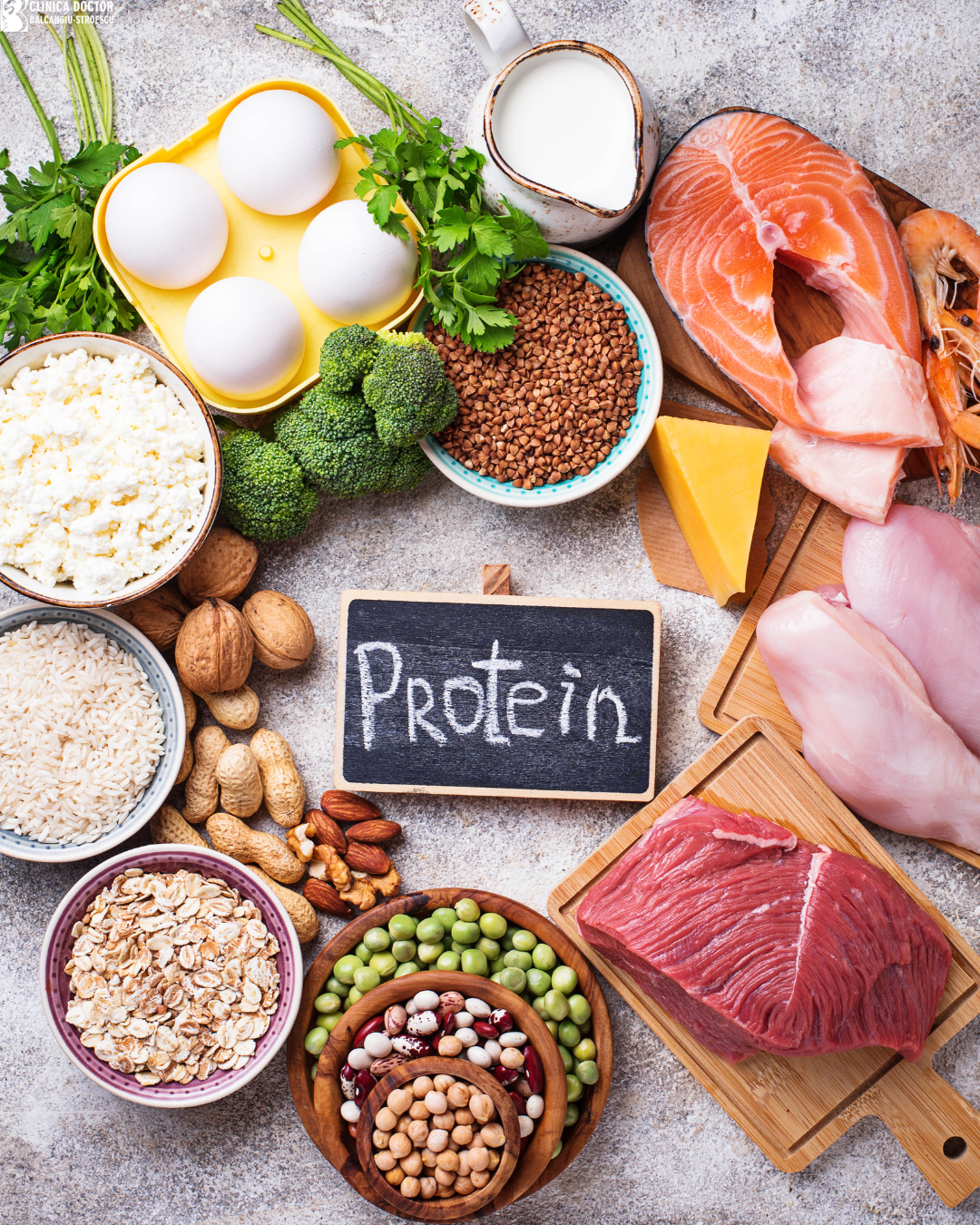
Building material of the body
Protein is the "brick" from which muscles, organs, skin, hormones, and enzymes are built. Without proteins, the body cannot repair itself, cannot maintain muscle mass, and cannot function optimally.
Why are they so important?
Proteins:
- - maintain muscle mass
- - support immunity
- - aid healing processes
- - provide satiety and support weight control
- - slow sugar absorption (important in diabetes)
Adequate protein intake helps stabilize blood glucose levels and prevent muscle loss, especially after age 40.
How much protein do we need?
On average:
- sedentary adult: ~0.8 g/kg/day
- active adult or elderly: 1–1.2 g/kg/day
- athletes: 1.2–1.6 g/kg/day
For example, a 70 kg person needs approximately 55–80 g of protein daily, ideally distributed across each meal.
Animal vs. plant proteins
Animal proteins (meat, fish, eggs, dairy) are complete — they contain all essential amino acids in the quantity the body needs.
Plant proteins (legumes, grains, nuts, seeds) are extremely healthy, but some may lack certain essential amino acids or contain them in insufficient quantities. The good news is that they can be combined intelligently.
Examples of efficient combinations:
- brown rice + beans
- lentils + whole grain bread
- hummus + whole wheat pita
- corn + beans
Soy (tofu) is a complete plant protein and a very good alternative to meat.
Additionally, plant protein brings metabolic benefits: it contains more fiber, has a lower glycemic impact, and a favorable effect on lipid profile (cholesterol).
How to integrate them correctly?
Ideally, each main meal should include a protein source, along with vegetables and quality carbohydrates.
Simple examples:
- egg + vegetables + whole grain bread
- fish + salad + brown rice
- Greek yogurt + seeds + oat flakes
- lentils + brown rice + tomato sauce
What should we know about protein powders?
Protein powders can be useful for reaching protein targets, but are not necessarily required for everyone. They can be a real help during caloric deficit periods because they provide a large amount of protein with reduced caloric content. They can also be recommended for vegetarians and vegans, for whom complete protein sources are more limited.
Before consuming a protein powder, it is important to:
- - check the sugar content and ingredient list
- - not exceed daily requirements
- - avoid unnecessary amino acid supplementation
Maximum caution is required in: patients with kidney disease, liver disease, diabetes, psychiatric conditions, children, pregnancy, and frail elderly persons.
Conclusion
Proteins are the foundation of structural integrity and metabolic balance.
Quality, appropriate quantity, and correct distribution make the difference between functional nutrition and unbalanced nutrition.