Useful information
Retinoids in Skin Care: A Complete Guide for Patients
This article explains what retinoids are, the differences between retinoid derivatives, how they act in the skin, their scientifically proven benefits (acne, signs of aging, texture), how to introduce them correctly into a routine, and the questions that most commonly arise before a dermatology consultation.
Patient guide
Retinoids are a family of vitamin A derivatives that have been used in dermatology for more than 40 years. Although they are frequently associated with anti-aging treatment, their medical use is much broader, with the strongest evidence supporting the treatment of acne and photoaging.
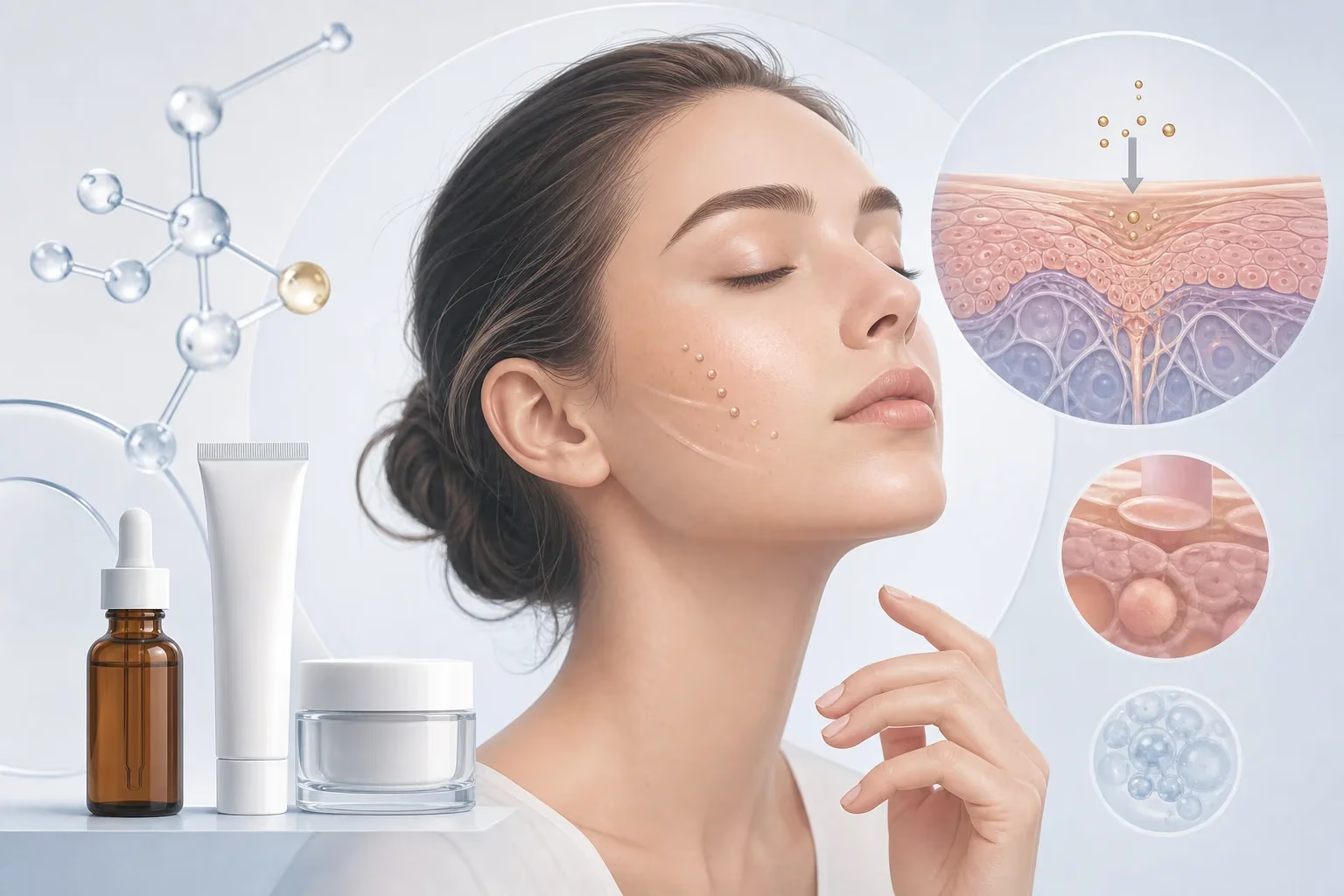
In the skin, retinoids influence processes such as keratinocyte differentiation, epidermal turnover, comedone formation, and the remodeling of dermal components. Because of these effects, they may provide benefits for acne lesions, skin texture, pigmentation, and certain signs of photodamage.
However, “stronger” does not always mean “better.” The choice of retinoid, its concentration, application frequency, and how it is introduced into a routine should be tailored to the skin type, indication, and individual tolerance.
Key points
- Retinoids are dermatological medications, not just cosmetic ingredients.
- Initial irritation (retinization) is normal.
- Daily photoprotection is essential during retinoid treatment.
In this article
01
What are retinoids, and how do they differ?
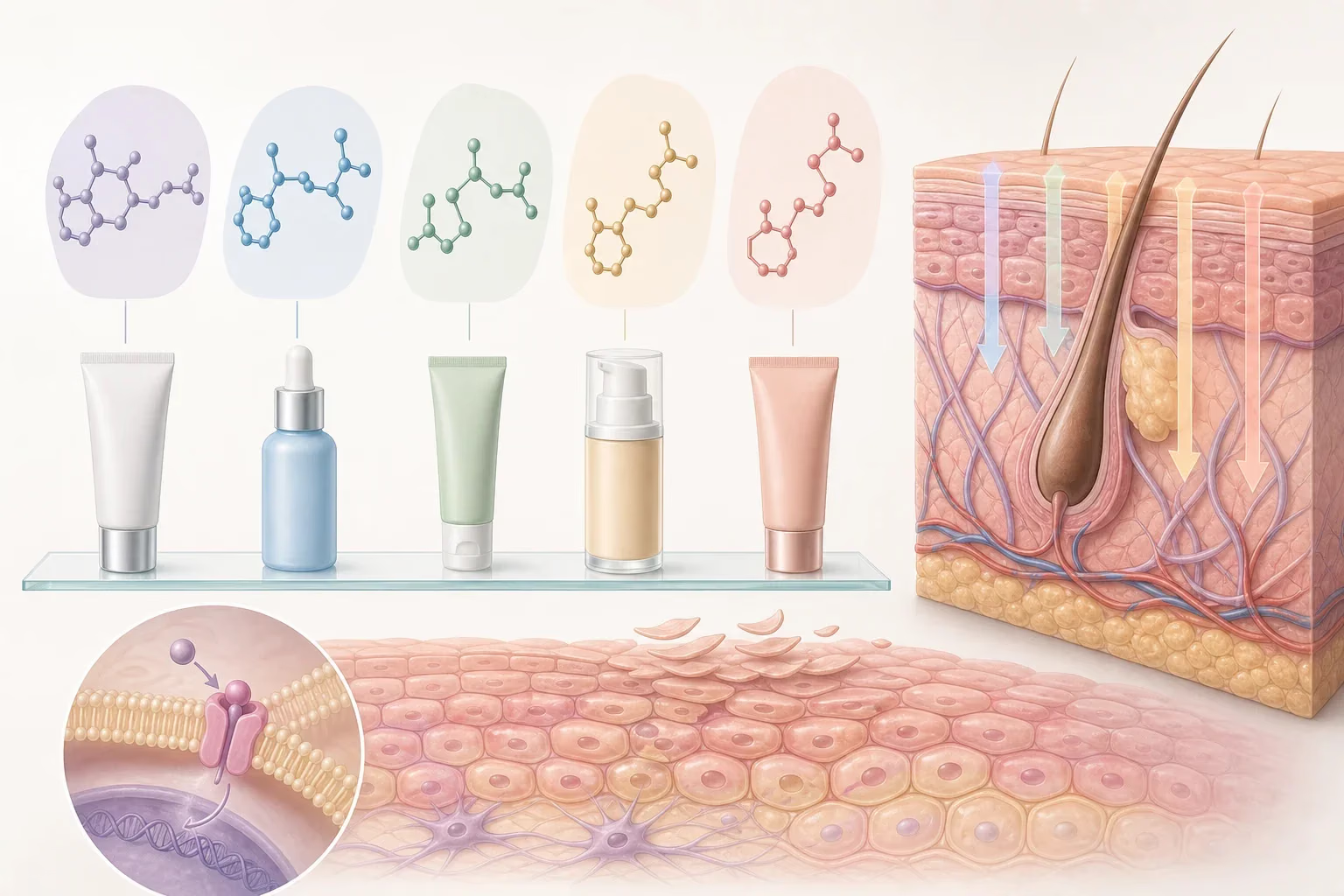
Retinoids are compounds derived from vitamin A or its analogues. They act through retinoid receptors and alter the expression of certain genes involved in cell proliferation and differentiation.
Several molecules with different properties are used in dermatology.
Retinoid is the umbrella term for all derivatives in this class.
Tretinoin (retinoic acid) is the acidic, active form of vitamin A and does not require conversion in the skin. It is one of the most extensively studied topical retinoids for both acne and photoaging.
Adapalene is a third-generation synthetic retinoid used primarily to treat acne. It has comedolytic and anti-inflammatory properties and is generally well tolerated compared with some other topical retinoids.
Tazarotene is a potent topical retinoid used primarily for acne and certain keratinization disorders, including psoriasis.
Retinol and retinal (retinaldehyde) are forms found mainly in dermocosmetic products. They must be converted in the skin before becoming retinoic acid, the biologically active form. They generally have lower activity than tretinoin but may be more easily tolerated.
Isotretinoin is a powerful oral medication prescribed to treat severe forms of acne, such as nodular or conglobate acne, that are refractory to topical treatments.
It is therefore important not to use the terms “retinol,” “retinal,” “retinoid,” and “tretinoin” as though they were synonymous. They belong to the same family but are not equivalent in terms of structure, potency, indications, or medication status.
02
Clinically proven benefits
From acne to fine lines—what the studies show
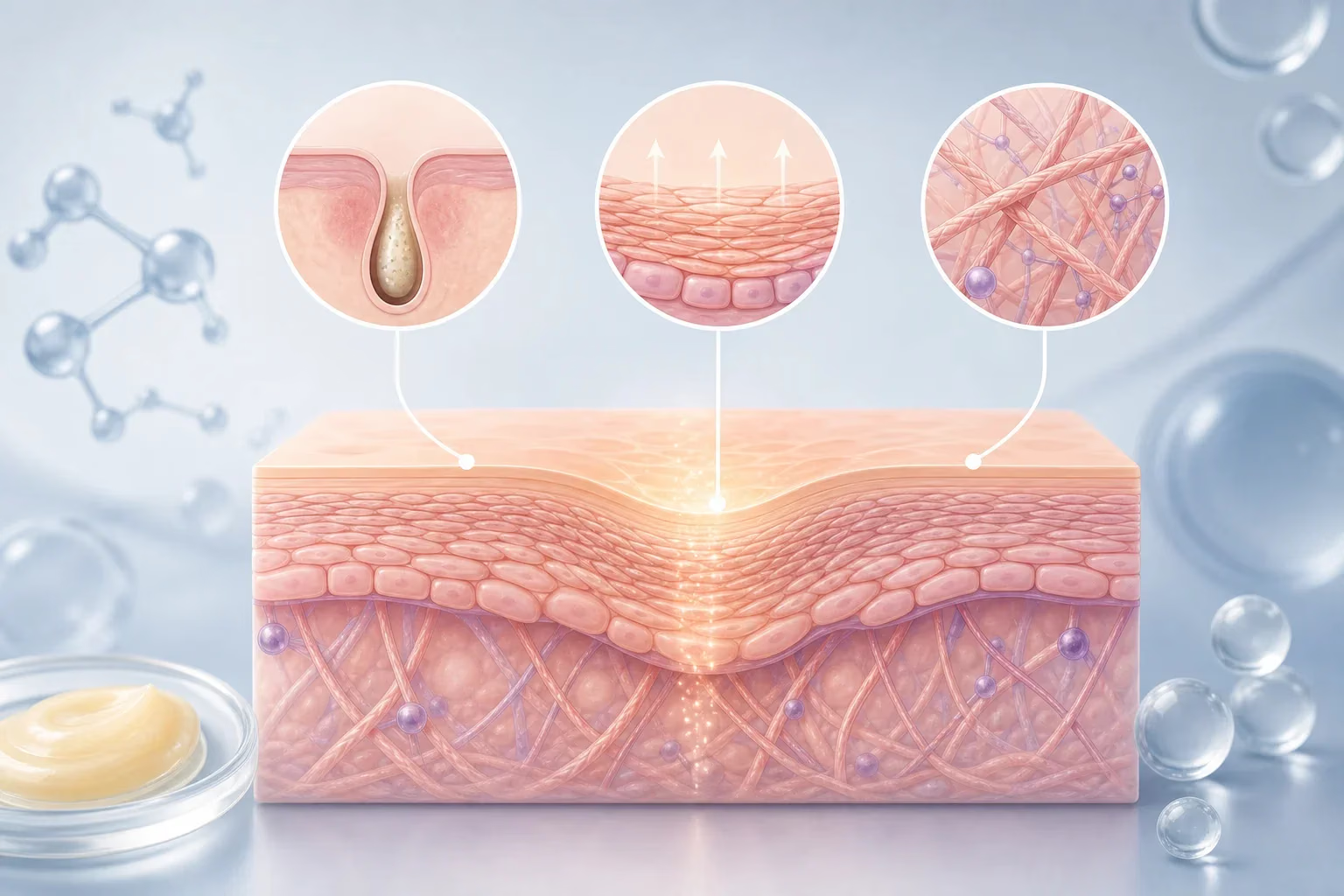
Acne vulgaris. The effectiveness of topical retinoids in acne vulgaris has been extensively documented: they reduce existing comedones, prevent new ones from forming, and have a moderate anti-inflammatory effect. They are recommended as first-line or maintenance therapy in most clinical practice guidelines.
Photoaging. In photoaging, classic placebo-controlled studies have shown that long-term application of topical tretinoin visibly improves fine lines, pigmentation irregularities, and the overall appearance of skin texture by stimulating dermal collagen synthesis and reorganizing disordered elastic fibers.
Beyond acne and aging, retinoids also have consistent evidence supporting their use in improving post-inflammatory hyperpigmentation and the texture of skin with enlarged pores. It is important to emphasize to patients that visible results take time—generally 8–12 weeks of consistent use for acne and several months for anti-aging effects—in contrast to the promises of “instant results” frequently encountered in marketing.
03
How to introduce a retinoid correctly into your routine
The most common adverse reaction—redness, mild flaking, and a stinging sensation—is known as “retinization.” It usually occurs during the first 2–4 weeks and is a direct consequence of accelerated cell turnover. It is not a sign of allergy but a temporary adaptive response that subsides as the skin barrier adjusts to the new renewal rate.
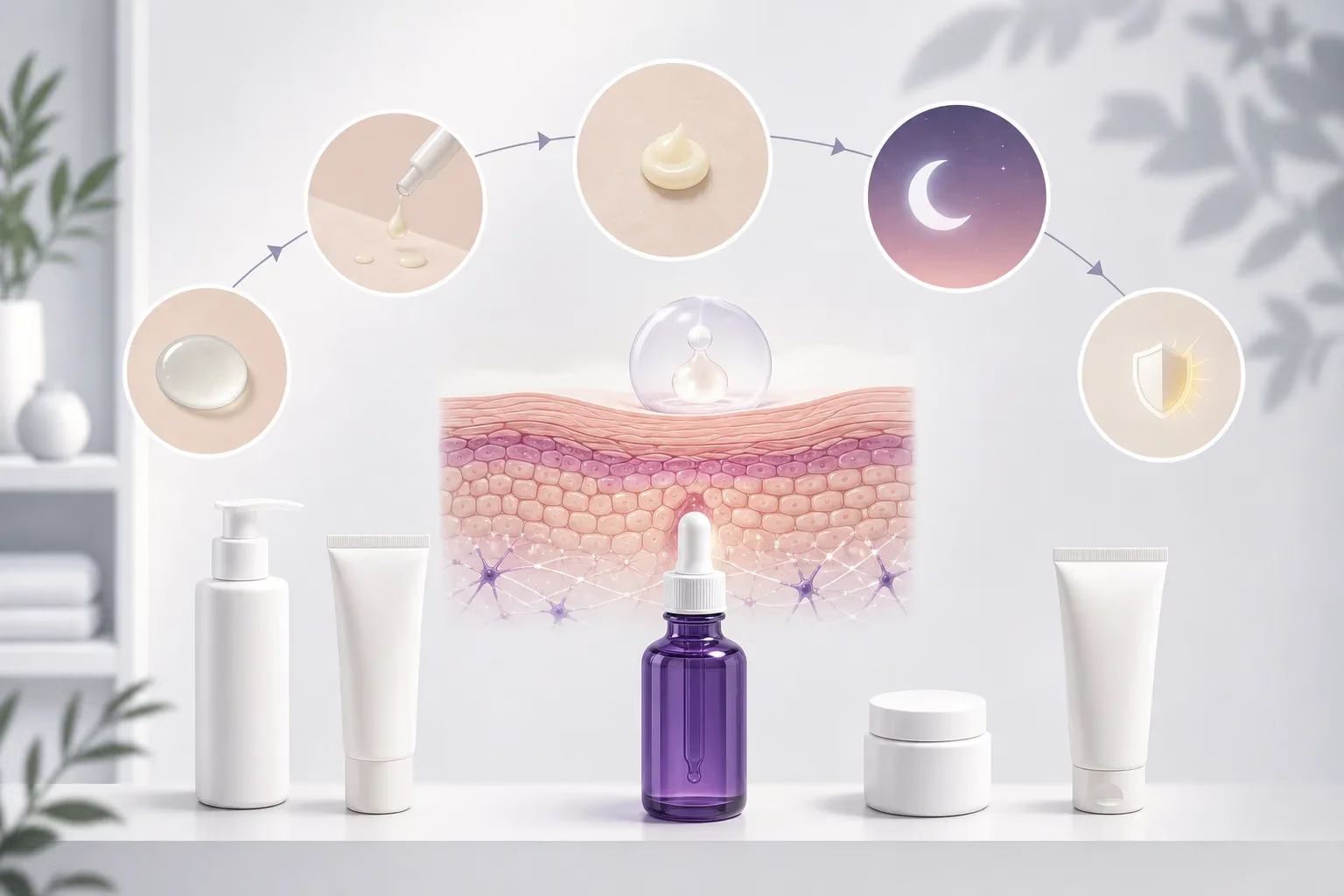
The recommended approach to minimizing discomfort includes using a small amount (a pea-sized quantity for the entire face), introducing it gradually (2–3 applications per week during the first few weeks, followed by a gradual increase in frequency), applying it to completely dry skin (which reduces penetration and, consequently, irritation), and incorporating an emollient moisturizer applied either before or after the retinoid to support the skin barrier. Equally important, daily photoprotection with an SPF of at least 30 is necessary because skin treated with retinoids temporarily becomes more sensitive to UV radiation, and a lack of protection may partially reverse the anti-aging benefits achieved.
Retinoids and pregnancy
There is an important difference between topical and systemic retinoids.
Systemic retinoids, particularly isotretinoin, have a well-established teratogenic risk and are contraindicated during pregnancy. With topical retinoids, systemic absorption is much lower, and the available observational data have not demonstrated a clear increase in the risk of birth defects. Nevertheless, because data are limited and alternative treatments are available, it is still recommended that topical retinoids be avoided during pregnancy.
Therefore, if a patient discovers that she is pregnant while using a topical retinoid, treatment should be discontinued and the situation discussed with her physician, without automatically assuming that accidental exposure has caused a fetal effect.
Final takeaway
Conclusion
Retinoids are among the most extensively studied molecules in dermatology, with benefits demonstrated particularly in the treatment of acne and photoaging. However, results depend on choosing the right molecule, introducing it gradually, and using it consistently for a sufficiently long period.
A dermatology consultation can help with selecting the appropriate retinoid, determining the concentration and application frequency, and tailoring treatment to the specific characteristics of each person’s skin.
Medical information notice
This material is for informational purposes and does not replace a medical consultation, diagnosis, or personalized recommendation from a physician.
Frequently asked questions
Do retinoids thin the skin?
No. This is a common but misleading belief. Retinoids may initially cause flaking and irritation, which can create the impression that the skin is becoming “thinner.” In the long term, however, tretinoin may increase epidermal thickness and stimulate dermal processes associated with collagen synthesis.
Can I use retinoids every evening?
It is not essential and depends on the molecule, concentration, and individual tolerance. Daily application may be appropriate for some patients; for others, it is better to begin with 2–3 applications per week and increase the frequency later. The important point is that treatment can be continued over the long term without significant irritant dermatitis.
Should I be concerned if I become pregnant while using a topical retinoid?
Topical retinoids should be avoided during pregnancy, but the data available to date have not demonstrated a significant increase in the risk of birth defects following accidental exposure. Treatment should be discontinued and the situation discussed with a physician; accidental exposure does not automatically mean that there is a significant fetal risk.
Medical sources
- 1
Guidelines of care for the management of acne vulgaris, 2024
Journal of the American Academy of Dermatology
- 2
Comparing Tretinoin to Other Topical Therapies in the Treatment of Skin Photoaging: A Systematic Review, 2024
American Journal of Clinical Dermatology
- 3
Topical tretinoin for treating photoaging: A systematic review of randomized controlled trials, 2022
International Journal of Women's Dermatology
Continue reading
Related medical articles

Abdominal Fat: When Does It Become a Health Risk?
Abdominal fat, particularly visceral fat accumulated around the organs, is associated with a higher risk of insulin resistance, type 2 diabetes, fatty liver disease, and cardiovascular disease. Below, we explain why fat distribution may matter more than weight, how to measure waist circumference correctly, which values indicate increased risk, and what changes may help reduce it.

CTX310: What the First Human Results Mean for Cholesterol
CTX310 is an investigational intravenous CRISPR therapy. In a 15-participant phase 1 study, the four-person 0.8 mg/kg cohort had mean day-60 reductions of 48.9% in LDL cholesterol and 55.2% in triglycerides; it is not an approved treatment.