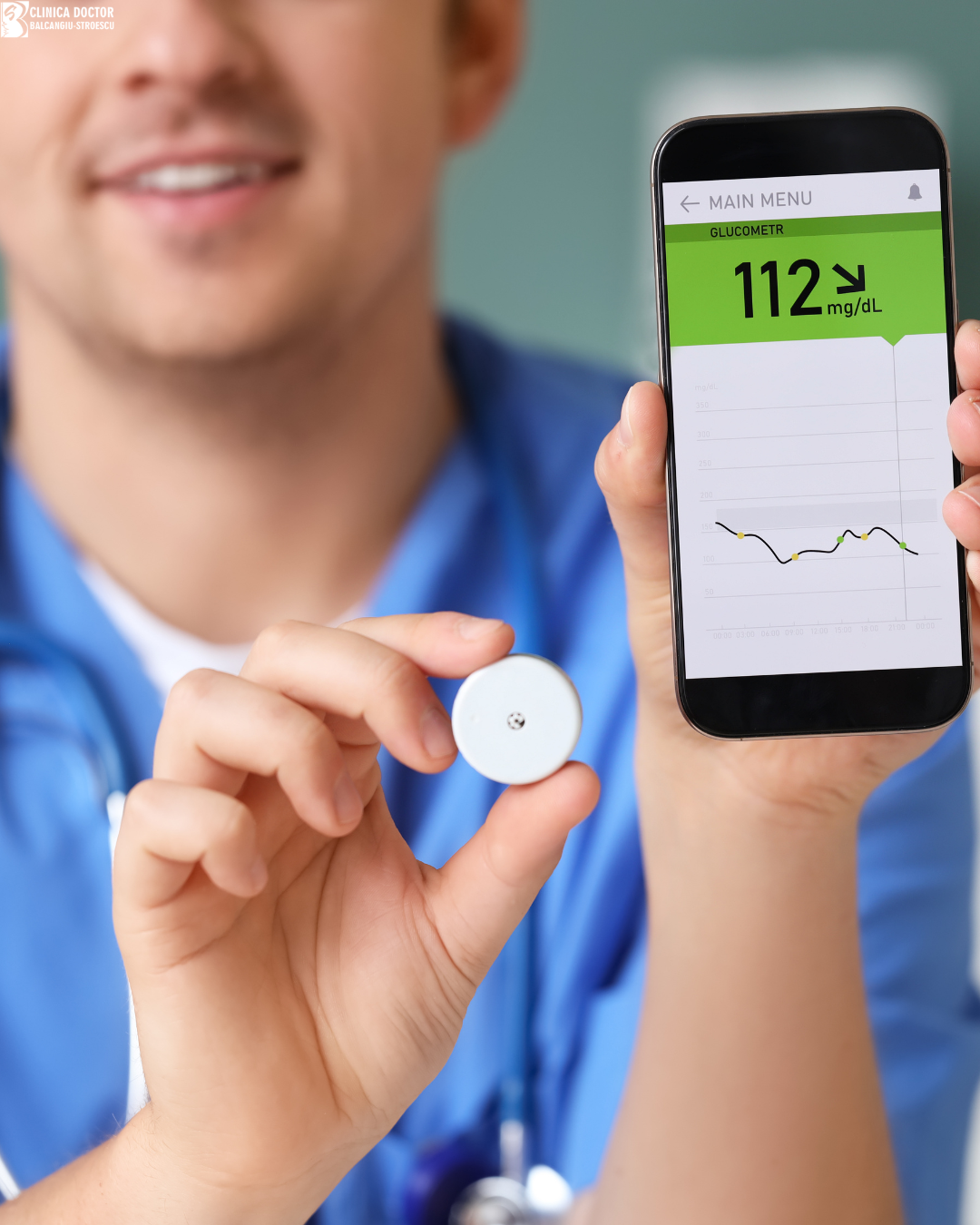
Glucose monitoring has evolved significantly in recent years, and glucose sensors (CGM – Continuous Glucose Monitoring) offer patients a modern, accurate, and much more comfortable method of tracking glucose values.
In this article, we explain clearly what glucose sensors are, how they work, and how to use them correctly.
What are glucose sensors (CGM)
Glucose sensors are modern devices that continuously measure glucose levels in interstitial fluid, without the need for repeated finger pricks.
They offer:
- continuous monitoring (24/7)
- real-time values
- glucose trends
- alerts for hypoglycemia or hyperglycemia
How glucose sensors work
The sensor is a small device applied to the skin (usually on the arm or abdomen).
Operation involves:
- a thin filament inserted under the skin with the help of a needle that retracts (the needle does not remain in the skin)
- measuring glucose from interstitial fluid
- transmitting data to a receiver or phone
Values are updated every few minutes.
Where to mount the sensor
The most common areas:
- back of the arm
- abdomen
- sometimes thigh (depending on device)
👉 It is important to choose an area:
- without irritation
- without scars
- with adequate subcutaneous tissue
How to mount the glucose sensor
Installation is simple and usually painless.
Main steps:
- Clean the area with alcohol
- Let the skin dry
- Apply the device using the applicator
- Activate the sensor (with your phone or receiver)
What information does CGM provide
Glucose sensors do not just show a single value, but provide a complete picture:
- current glucose level
- trend (rising / falling / stable)
- history of values
- daily variations
- time spent in target range (Time in Range)
Advantages vs traditional glucose testing
Advantages:
- no frequent finger pricks
- detects nocturnal hypoglycemia
- helps adjust treatment
- provides better diabetes control
Limitations:
- there is a small difference compared to blood glucose
- requires periodic replacement
- may give errors in certain situations (incorrect use, dehydration, prolonged pressure on the sensor)
How long does a sensor last
Depends on the type of device:
- 10–14 days (most common)
- some models up to 6–7 days
After this period, the sensor must be replaced.
Common mistakes in sensor use
For accurate results, avoid:
- mounting on irritated skin
- partial detachment of the sensor
- ignoring calibration (if necessary)
- correcting very high or very low values without checking glucose by finger prick
- excessive exposure to water or sweat without protection
Who should use glucose sensors
CGM sensors are especially recommended for:
- patients with type 1 diabetes
- patients with type 2 diabetes on insulin therapy
- people with frequent hypoglycemia
- pregnant women with diabetes
- patients who want stricter glucose control
What you need to know before using CGM
- not all fluctuations are dangerous
- it does not completely replace the glucometer
- correlation with symptoms is important
- sometimes confirmation by finger prick glucose is necessary
❓ Frequently Asked Questions (FAQ)
Do glucose sensors hurt?
No, installation is generally painless.
Are they better than a glucometer?
They do not completely replace the glucometer, but offer much more information and are more comfortable.
Can you shower with the sensor?
Yes, most are water-resistant.
How accurate are the values?
They are very clinically useful, but there may be small differences compared to blood glucose.
Do you need a prescription for a sensor?
Depends on the type of device and compensation system.
🩺 When to discuss with your diabetologist
It is recommended to consult a doctor before using CGM for:
- choosing the right type of sensor
- correct interpretation of data
- treatment adjustment
📞 Schedule an evaluation
If you want to start monitoring with glucose sensors or need help interpreting the data:
👉 Schedule an appointment for a diabetology consultation and a personalized monitoring plan.