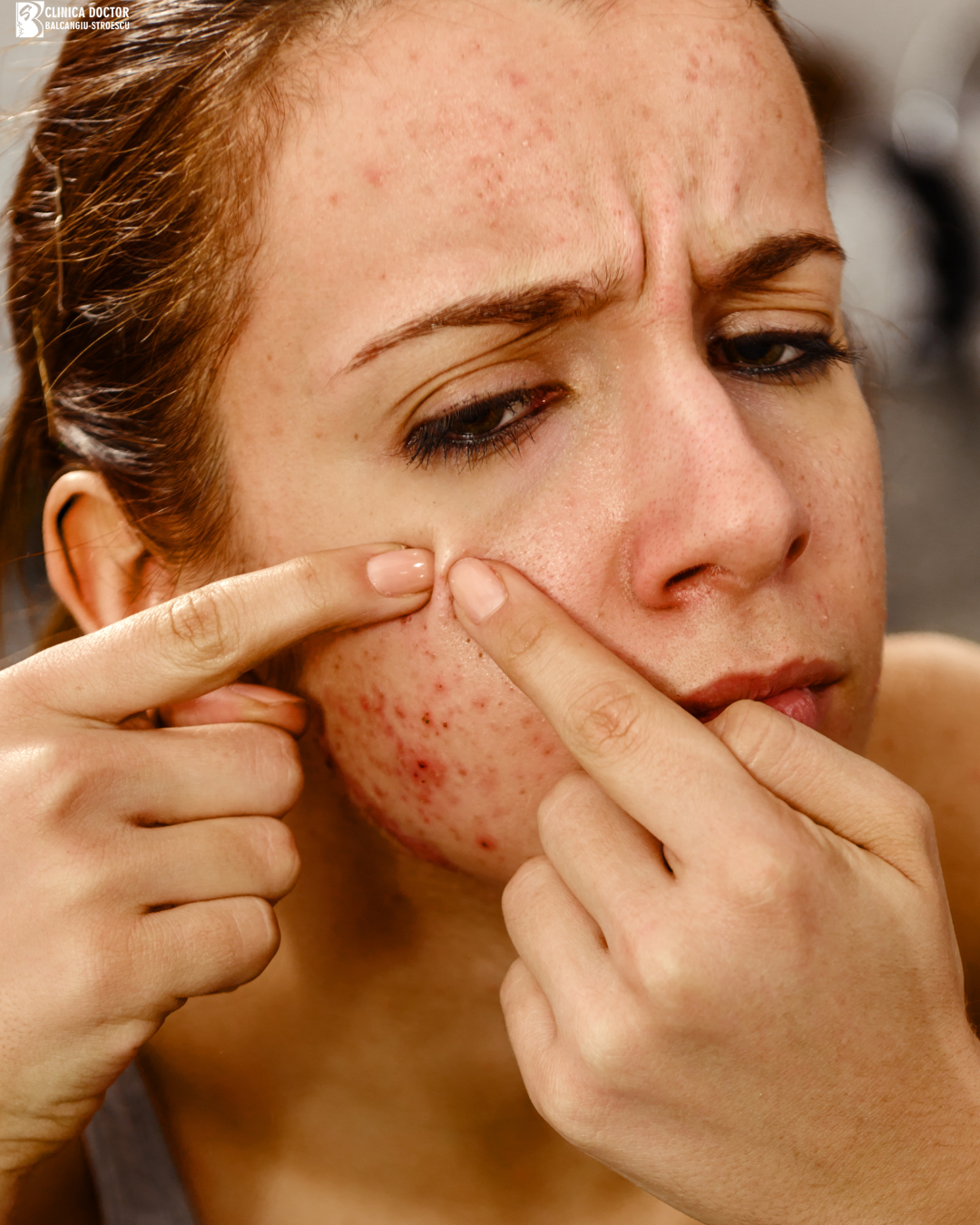
Acne is one of the most common dermatological conditions and affects both adolescents and adults. Although it is often associated with the adolescent period, acne can appear at any age and can have a significant impact on skin appearance and self-confidence.
This condition occurs when the hair follicles of the skin become blocked with sebum and dead cells, which promotes inflammation and bacterial development. Understanding the causes and treatment methods is essential for effective acne control.
This guide provides useful information for patients dealing with this dermatological problem.
What is acne
Acne is an inflammatory skin condition that occurs when the skin pores become blocked with sebum and dead cells. This process can promote bacterial development and the appearance of inflammation.
Acne lesions appear most frequently in areas where there is a large number of sebaceous glands, such as:
- face
- back
- chest
- shoulders
Acne can range from mild forms to more severe forms that can leave scars.
Causes of acne
Acne is a multifactorial condition, which means it can have multiple causes.
Excessive sebum production
Sebum is an oily substance produced by sebaceous glands. When produced in excess, it can block skin pores.
Pore clogging
Dead skin cells can accumulate and obstruct hair follicles.
Bacteria
The bacterium Cutibacterium acnes can contribute to skin inflammation and the development of acne lesions.
Hormonal factors
Androgenic hormones stimulate sebum production, which is why acne often appears during adolescence or during certain hormonal periods.
Genetic factors
Genetic predisposition can influence the development of acne.
Types of acne
Acne can have multiple forms, depending on the type of lesions.
Comedones
These are non-inflammatory lesions and include:
- blackheads (open comedones)
- whiteheads (closed comedones)
Papules and pustules
These are inflammatory lesions characterized by redness and sometimes purulent content.
Nodules and cysts
These are more severe forms of acne that can cause pain and can leave scars.
Acne treatment
Treatment depends on the severity of acne and the type of lesions.
Topical treatment
In mild to moderate forms, treatments can be applied directly to the skin.
These can include:
- topical retinoids
- benzoyl peroxide
- topical antibiotics
- salicylic acid
Oral treatment
In certain cases, a dermatologist may recommend oral treatment.
This can include:
- antibiotics
- hormonal treatments
- systemic retinoids
Treatment is established based on the characteristics of each patient.
Dermatological procedures
Some dermatological procedures can be used to improve skin appearance.
These can include:
- chemical peels
- laser treatments
- professional dermatological cleansing
Skin care in patients with acne
In addition to medical treatment, proper skin care is very important.
It is recommended:
- gentle cleansing of the skin twice a day, with mandatory makeup removal at the end of the day
- using non-comedogenic products
- avoiding squeezing acne lesions to express purulent content
- using sun protection daily
These measures can help prevent acne from worsening.
What to avoid
Certain habits can worsen acne.
It is recommended to avoid:
- squeezing blackheads
- using greasy cosmetic products
- excessive washing of the skin
- frequent touching of the face
· keeping makeup on the skin during sleep
These behaviors can promote inflammation and subsequently increase the risk of scarring.
When to consult a dermatologist
Dermatological consultation is recommended when:
- acne is severe
- lesions are painful
- scars appear
- cosmetic treatments are not effective
A dermatologist can evaluate the type of acne and can recommend appropriate treatment.
Conclusion
Acne is a common but treatable condition. Correct diagnosis and appropriate treatment can reduce inflammation and prevent scarring.
With proper skin care and adherence to medical recommendations, most patients can achieve significant improvement in skin appearance.
To evaluate acne and establish a personalized treatment plan, dermatological consultation is recommended.