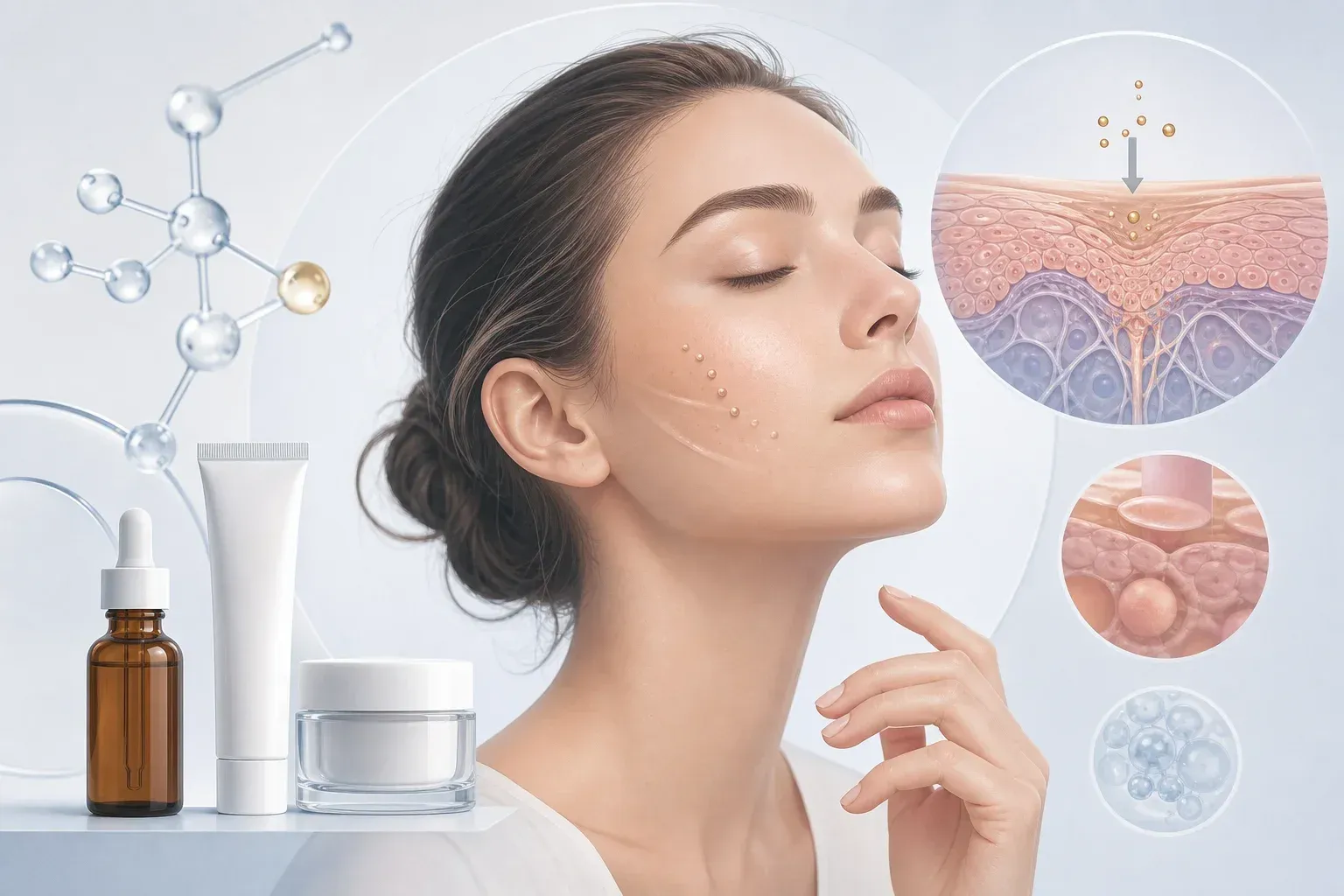

Collagen biostimulators are modern injectable treatments used in aesthetic medicine to stimulate natural collagen production and improve skin firmness.
Unlike hyaluronic acid, which provides immediate volume, biostimulators work over time, regenerating the skin from within.
What are collagen biostimulators
Biostimulators are injectable substances that:
- stimulate collagen production
- improve skin elasticity
- restore tissue firmness and structure
👉 They do not directly "fill" wrinkles, but rather cause the skin to regenerate naturally at its own pace.
Types of biostimulators
The most commonly used are:
- polylactic acid (PLLA)
- calcium hydroxyapatite (CaHA)
- polynucleotides (in some cases)
👉 Each has different indications and mechanisms.
How it works
After injection:
- the substance stimulates fibroblasts
- collagen production increases
- the skin becomes firmer and more elastic
👉 Results appear progressively, over several weeks or months.
What they are recommended for
Biostimulators are effective for:
- skin laxity
- facial volume loss
- fine and moderate wrinkles
- facial contour definition
- overall facial rejuvenation
How the procedure is performed
The procedure lasts approximately 30–45 minutes.
- Facial evaluation
- Disinfection of the treatment area
- Product injection
- Light massage (in some cases)
👉 Local anesthesia can be used for additional comfort.
When do results appear
- progressively within 4–8 weeks
- maximum effect after several months
- duration: up to 1–2 years
A few days before the procedure:
For safety:
- avoid alcohol
- avoid anti-inflammatory medications
- avoid supplements that increase bleeding risk
Post-procedure instructions
For optimal results:
In the first 24–48 hours:
- avoid excessive touching of the treated area
- avoid intense exercise
- avoid exposure to high temperatures (sauna, hot baths)
In some cases:
- massage of the treated area is recommended, depending on the product used
Possible reactions
May include:
- edema
- redness
- bruising
- local sensitivity
👉 These are temporary and disappear within a few days.
Who is NOT a suitable candidate
The procedure is not recommended:
- during pregnancy or breastfeeding
- in active infections
- in certain autoimmune diseases
Advantages of biostimulators
- natural effect
- long-lasting results
- improve skin quality
- do not excessively alter facial volume
Difference from hyaluronic acid
👉 Hyaluronic acid:
- immediate volume
- rapid effect
👉 Biostimulators:
- gradual effect
- collagen stimulation
❓ Frequently Asked Questions (FAQ)
When will I see results?
After several weeks.
Is the procedure painful?
Minimal, manageable discomfort.
How long do the effects last?
Up to 1–2 years.
How many sessions are needed?
Usually 1–3 sessions.
When to choose biostimulators
They are suitable if:
- you want natural results
- you are dealing with skin laxity
- you want improved skin quality
📞 Schedule your evaluation
For the correct choice of treatment type and appropriate product:
👉 Schedule a consultation and personalized treatment plan.