Botulinum toxin injection (known by the trade name Botox) is one of the most popular aesthetic medicine procedures used to reduce expression lines. The treatment is frequently used for the forehead area, where wrinkles often appear as a result of repeated movements of the frontal muscle.
The procedure is minimally invasive, rapid, requires no recovery time, and offers effects lasting up to 3-6 months post-injection.
What is botulinum toxin?
Botulinum toxin - OnabotulinumtoxinA - is a purified protein, produced by the bacterium Clostridium botulinum, used for cosmetic purposes for temporary relaxation of facial muscles and wrinkle improvement, as well as for medical purposes for various conditions (migraines, hyperhidrosis, bruxism). In aesthetic medicine, the diluted substance is injected in small amounts into specific areas of the face to reduce muscle contractions that cause expression lines.
By relaxing the muscles, the skin becomes smoother, and wrinkles are softened.
Forehead wrinkles
Wrinkles on the forehead appear mainly due to repeated movements of the frontal muscle, such as raising the eyebrows.
These wrinkles are called expression lines and can become more pronounced with age, as the skin loses elasticity.
Other classic areas where botulinum toxin injection can be performed are glabellar wrinkles (between the eyebrows, also called frown lines) and those in the periocular area ("crow's feet"). Because the facial muscles in the upper third of the face act in synergy, as well as in antagonism to create certain movements such as raising the eyebrows, lowering and bringing the eyebrows together, it is recommended to inject botulinum toxin into all three classic anatomical areas to obtain a more harmonious effect, by preserving the balanced distribution of muscular forces, control over eyebrow position, and prevention of compensatory mechanisms.
How is the procedure performed?
The botulinum toxin injection procedure is rapid and typically lasts approximately 10-20 minutes.
Depending on each patient's pain sensitivity threshold, an anesthetic cream layer may or may not be applied beforehand.
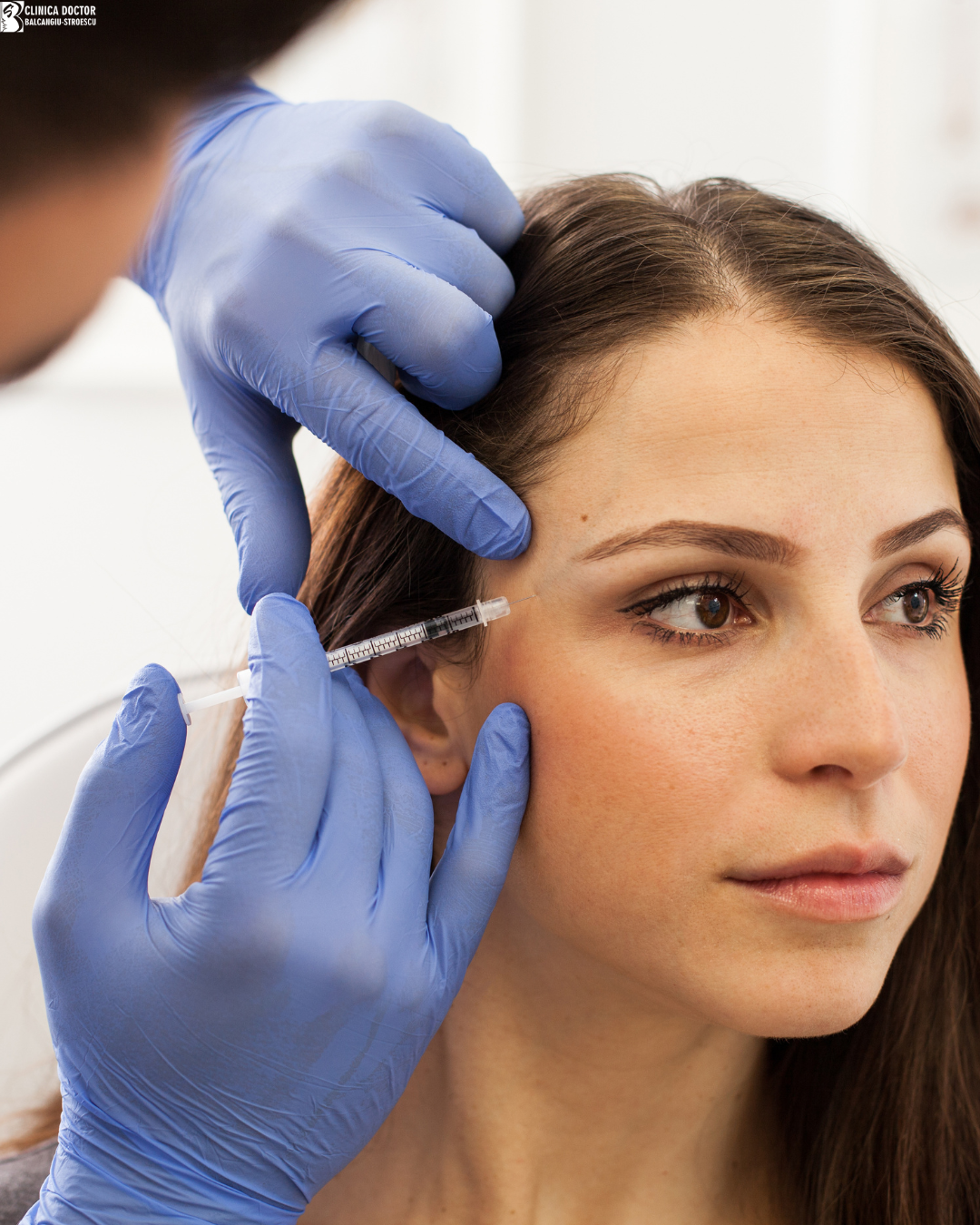
The doctor uses a very fine needle to inject small amounts of diluted botulinum toxin into the facial muscles responsible for wrinkle formation. The number of injection points depends on the treated area and each patient's characteristics.
The procedure is generally well tolerated.
When do results appear?
Botox effects are not visible immediately.
Typically:
- results begin to appear after 3-5 days
- the full effect is visible after approximately 10-14 days
After treatment, wrinkles become less visible, and the skin takes on a smoother and more relaxed appearance.
How long does the effect last?
The effect of botulinum toxin is temporary.
In most cases, results are maintained for approximately 3-6 months, after which muscular activity gradually returns, and wrinkles may reappear.
To maintain results, treatment can be repeated at intervals determined by the doctor.
Recommendations after the procedure
After injection, patients can quickly return to their usual activities. However, there are some general recommendations that can help achieve the best results.
It is recommended:
- avoiding exposure to extreme temperatures (sauna, hot baths) for approximately 24-48 hours
- avoiding massage application, pressure, local trauma, or cosmetic procedures on the treated area for at least 10 days post-procedure
- avoiding intense physical activities for 24-48 hours post-procedure
- maintaining vertical head position for at least 6 hours after treatment
The doctor can provide additional recommendations depending on each case.
Who can benefit from treatment?
Botulinum toxin treatment at the forehead level is frequently used by people who wish to reduce horizontal expression wrinkles and achieve a more rested appearance of the face. Injection into an anatomical area such as the forehead can be complemented by other minimally invasive aesthetic procedures, as part of a personalized and balanced slow-aging protocol.
Is the procedure safe?
When performed by an experienced doctor, the procedure is considered safe.
Botulinum toxin has been used in clinical practice for over 30 years and has been extensively studied. Correct administration and the use of appropriate doses are essential to achieve harmonious results without altering facial identity.
Conclusion
Botulinum toxin for forehead wrinkles represents a frequently used aesthetic option for reducing expression lines. The treatment is rapid, minimally invasive, and can provide visible results in a short time.
To achieve safe and natural results, the procedure must be performed by a doctor experienced in aesthetic medicine.
To evaluate forehead wrinkles and establish a personalized treatment plan, scheduling a medical consultation is recommended.